Unveiling of ‘History and Lessons from the Nigerian Civil War’, in Enugu
From Maurice Okafor, Enugu
As part of efforts to heal the wounds of the Nigerian Civil War, which lasted from May 30, 1967, to January 1970, calls have been renewed for the Federal Government to declare May 30 every year as a public holiday to honour Nigerians who died during the conflict.
The Chairman of the Nigeria Public Affairs Analysts, Enugu State chapter, Dr Ambrose Igboke, made the call during the unveiling of a new book titled History and Lessons from the Nigerian Civil War, held in Enugu on Thursday, September 3, 2026.
Igboke also urged the South-East governors to consider making May 30 a public holiday in the region, similar to the June 12 Democracy Day observed in the South-West.
The book reviewer said that although Nigerians did not wish for another civil war, it was important to honour those who died in the conflict, noting that they paid the ultimate price for the nation’s coexistence and that their sacrifices should not be forgotten.
“As a matter of fact, the Federal Government should declare May 30 as a commemoration day to honour the dead of the Nigerian Civil war If the Federal Government objects, It’s my wish that the Governors of the South East zone should emulate their Colleagues in South West zone, who declared June 12 as work free day, in honour of late MKO Abiola,who died in the struggle for democracy,” he said.
Igboke appealed to Nigerians, particularly youths, to embrace peace and dialogue as the best approaches to resolving conflicts, stressing that the consequences of wars were devastating.
His words, “The book aims to inspire younger generations to embrace peace, dialogue and national unity rather than conflict.”
Igboke said the book traced Nigeria’s historical development from the colonial era to independence, as well as the political crises and other events that culminated in the Civil War.
He commended the authors — Dr Uchenna Cyril Anioke, a renowned journalist, public affairs analyst and publisher who is also the Chief Executive Officer of Freedom Square Online Television; Chief Obioma Ikechi, a renowned publisher; and Elder James I. Egwuonwu — for incorporating their personal experiences of the war into the book.
He said many previous writers had relied on second-hand information and unverified documents, describing the new publication as a valuable account of the conflict and a lesson on why wars must be avoided at all costs.
The Chairman of the unveiling, Surveyor Ugoh Chime, described the book as unique and commended the authors for their unity of purpose and collective efforts in giving the public another perspective on the Nigerian Civil War, its lessons and the reasons peace and dialogue should prevail under all circumstances.
Chime urged Nigerians to read the book and draw lessons from the Civil War to avoid future conflicts.
A political scientist, Prof Godwin Udeuhele, who represented Hon Toby Okechukwu and Hon Nnoli Nnaji, described the book as a good initiative for promoting sustainable peace in Nigeria, adding that Nigerians had a lot to learn from their history.
The Commissioner for Environment, Prof Sam Ugwu, who represented the Chief Guest of Honour, His Excellency, Dr Peter Mbah, described history as vital to understanding the past and shaping the future.
Ugwu said the book provided important documentation of the remote and immediate causes of the Civil War.
He added that it also highlighted the socio-economic and political implications of the conflict.
Ugwu advocated the restoration and strengthening of history as a subject in Nigerian primary and secondary schools.
He described the removal of history from the school curriculum as dangerous and urged curriculum planners to ensure adequate teaching of Nigeria’s history.
He commended the authors for documenting the conflict and urged Nigerians to read the book and learn from its lessons.
Speaking earlier on behalf of his co-authors, Dr Uchenna Cyril Anioke said the book provided an objective and chronological account of the Nigerian Civil War.
He lamented that the history of the war had often been told in fragments, shrouded in silence or viewed through biased perspectives.
His words, “Today, we are not just presenting a book; we are unveiling a mirror for our nation.
“When three of us, Ikechi, Uchenna and Egwuonwu sat down to begin this project, we asked ourselves a critical question.
“How do we tell a painful history objectively so that it heals rather than divides?
“Our answer was structure and chronological accuracy. By arranging these historic events strictly by date, from the early rumblings of 1966 to the final declarations of 1967, we avoided political distortion,” he said.
Anioke said the book provided a factual, step-by-step account of the crisis and its underlying developments.
He said Nigeria could not build a stable future on a foundation of forgotten or distorted history.
According to him, the primary goal of the book was to foster national unity, promote institutional memory and encourage reflection on Nigeria’s past.
Anioke said the book was intended for students, policymakers and Nigerians interested in peace and national development.
“The lessons of the Civil War teach us that peace is a deliberate choice.
“We hope this book inspires you to choose dialogue, empathy and unity every day.
“Our book is not a weapon meant to reopen old wounds of the Civil War.
“Rather, it is meant to be a mirror to reflect our shared responsibility and historical heritage,” he said.
The immediate past Governor of Enugu State, Ambassador Lawrence Ugwuanyi, was represented at the event by Dr Chinedu Onuh.
Senator Osita Ngwu, representing Enugu West Senatorial District in the National Assembly, was represented by his media aide, Dr Luke Mgboh, while Senator Ikeje Asogwa, representing Enugu North Senatorial District, was also represented by his media aide, Mr Samson Ezea.
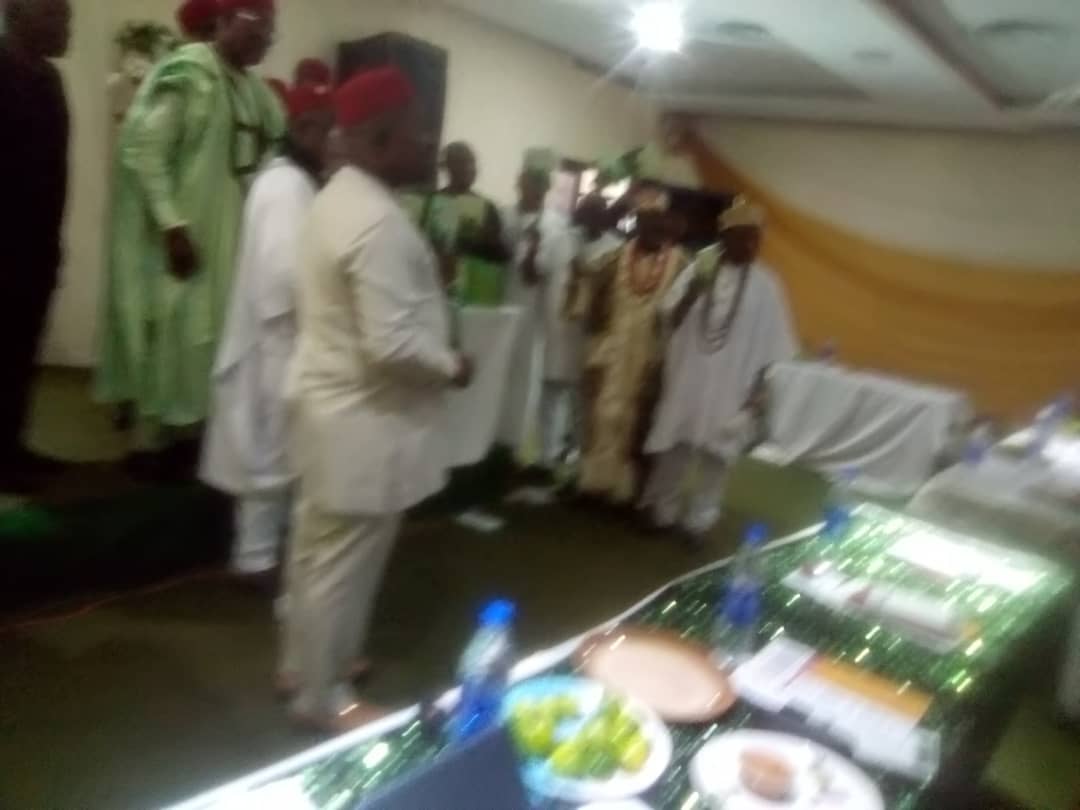
The event was attended by a cream of dignitaries from various sectors, including journalists, authors, civil society organisations, academics and traditional rulers, among others.