By Stella Odueme
The Nigerian Supreme Council for Islamic Affairs (NSCIA) has called on Nigerians to remain calm and vigilant following the confirmation of an Ebola Virus Disease (EVD) case in the Federal Capital Territory (FCT).
The Council also urged the Federal and state governments to intensify disease surveillance, contact tracing, public enlightenment and preparedness of healthcare facilities to prevent further spread of the disease.
The NSCIA made the call in a public health advisory following an announcement by the Minister of Health and Social Welfare, Prof. Muhammad Ali Pate, on the laboratory-confirmed case in the FCT.
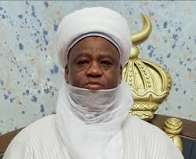
The advisory was signed by the NSCIA Secretary-General, Prof. Is-haq Oloyede in which the Council, under the leadership of its President-General and Sultan of Sokoto, Alhaji Muhammad Sa’ad Abubakar, commended the Federal Government, the Federal Ministry of Health and Social Welfare, and the Nigeria Centre for Disease Control and Prevention (NCDC) for their efforts to contain the disease.
It urged the authorities to ensure adequate protection for healthcare workers and provide timely, accurate information to the public.
Explaining the nature of the disease, the Council said Ebola could spread through direct contact with the blood or body fluids of infected persons who had developed symptoms, contaminated materials, or the bodies of people who had died from the disease. It added that infection could also occur through contact with infected wild animals.
According to the advisory, symptoms may develop between two and 21 days after exposure and include fever, severe headache, weakness, muscle pain, vomiting, diarrhoea and, in some cases, unexplained bleeding.
The Council noted that the Bundibugyo strain associated with the current outbreak had no known approved vaccine or specific curative treatment, although early medical intervention and supportive care could significantly improve survival.
It advised Nigerians to practise regular handwashing, avoid direct contact with suspected cases and their bodily fluids, and promptly report suspected infections to the appropriate health authorities through the NCDC toll-free number, 6232.
The NSCIA further urged individuals experiencing symptoms after possible exposure to seek immediate medical attention, avoid close contact with others and comply with instructions from healthcare professionals.
It also cautioned against spreading unverified information or stigmatising affected individuals and their families, while encouraging the public to cooperate with health authorities on contact tracing.
Addressing the Muslim community, the Council emphasised that the preservation of life, known in Islamic jurisprudence as Hifz al-Nafs, was one of the fundamental objectives of Islamic law, or Maqasid al-Shari’ah.
Citing Qur’an 2:195, which warns against throwing oneself into destruction, the Council recalled the Prophet Muhammad’s (SAW) guidance on taking precautions during infectious disease outbreaks, including avoiding unnecessary movement into or out of affected areas.
It called on chief imams, Islamic scholars, state councils for Islamic affairs and Muslim organisations to intensify public health awareness through Friday sermons, religious gatherings and community engagements.
The Council also advised persons suspected of having the infection to refrain from attending congregational prayers pending medical assessment and to follow the guidance of health professionals regarding movement and treatment.
Reaffirming its support for the government’s response, the NSCIA pledged to mobilise its nationwide network of mosques, Islamic organisations and community leaders to promote disease prevention and public health education.
It urged Nigerians to remain calm and act responsibly, stressing that faith, prayer and appropriate medical care were complementary rather than contradictory.
The Council prayed for the protection of the nation, the recovery of those affected, the strength of healthcare workers and the safety of humanity against the disease.