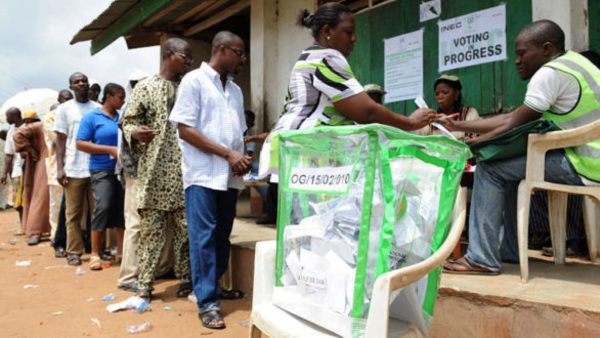
Civil Society Organisations (CSOs) have called for urgent political and institutional reforms to safeguard civic freedoms, tackle entrenched poverty, and rebuild public trust in Nigeria’s electoral processes as the nation prepares for the 2027 general elections.
The demand was made on Tuesday in Abuja at a joint press conference convened by the Women’s Rights Advancement and Protection Alternative (WRAPA) and the African Centre for Leadership, Strategy & Development (Centre LSD), with support from the MacArthur Foundation. The conference unveiled findings from the Civic Space, Poverty & Election (CISPEN) Project, a reform-focused initiative aimed at deepening democracy and broadening participation.
In her remarks, WRAPA’s Director of Programmes, Yemisi Nathaniel, lamented that despite 25 years of uninterrupted democracy, Nigeria’s civic space remains fragile and constrained by restrictive laws, shrinking freedoms, and deepening poverty.
She warned against the “undemocratic use” of legislation such as the Companies and Allied Matters Act (CAMA 2020) and the Cybercrime Act to silence dissent. “Civic space is the heartbeat of democracy. When it is under siege, freedoms shrink and the very foundation of participatory democracy and accountable governance is eroded,” she stressed.
The organisations expressed concern that more than 133 million Nigerians still live in multidimensional poverty despite the country’s abundant human and natural resources. According to them, deprivation at this scale leaves citizens vulnerable to vote-buying and political manipulation.
Speaking on electoral credibility, Director of Strategy at Centre LSD, Itia Otabor, faulted the current process of appointing the Independent National Electoral Commission (INEC) chairman, describing it as too critical to be left solely to executive discretion.
He proposed a more transparent system: “The position is too critical to be left solely to the discretion of one or two individuals. We propose that the role be advertised publicly, with clear criteria. Candidates should undergo thorough vetting, after which two or three names should be presented to the President, who would then make a choice. The nominees should also be screened by the DSS and confirmed by the National Assembly. If adopted, this process would build trust, enhance inclusiveness, and ensure that whoever emerges has the pedigree and credibility required to discharge the responsibilities of the office effectively.”
The CSOs further advocated constitutional reforms to strengthen INEC’s independence, neutrality, and operational capacity ahead of 2027.
Looking ahead, the groups announced plans to popularize the CISPEN findings through media campaigns, coalition-building, grassroots mobilization, sustained advocacy with policymakers, and expanded civic education targeting youth, women, and marginalized groups. They also pledged to design monitoring tools and scorecards to hold leaders accountable as the election season approaches.
The organisations urged the Executive and Legislature to integrate the recommendations from the CISPEN policy briefs into constitutional and legislative reforms. They also charged the judiciary to uphold its duty as guardian of democratic rights and called on INEC to prioritize transparency and neutrality in its operations.
CSOs Press for Inclusive Political Reforms to Strengthen Democracy Ahead of 2027 Elections