*Launches “Stop The Bleeding” campaign
President of the Nigeria Labour Congress (NLC), Comrade Joe Ajaero, has described kleptocracy and illicit financial flows as among the greatest threats to Nigeria’s survival, warning that the twin challenges continue to deprive citizens of quality education, healthcare, infrastructure, and decent living standards.
Speaking during the 2026 May Day celebration held under the theme, “Insecurity, Poverty – Bane of Decent Work,” Ajaero said corruption and illicit financial flows have evolved beyond isolated acts of misconduct into a systemic problem that continuously drains the nation’s resources and weakens public institutions.
According to the labour leader, Africa loses an estimated $90 billion annually to illicit financial flows, with Nigeria accounting for a significant share of the losses recorded in West Africa. He noted that billions of dollars that could have been invested in social services and economic development are instead lost through trade mis-invoicing, corruption, fraudulent procurement practices, and weak oversight mechanisms.
Ajaero lamented that the consequences of these losses are evident in rising poverty, unemployment, deteriorating infrastructure, poor public services, and the continued migration of skilled professionals from Nigeria in search of better opportunities abroad.
He stressed that the nation’s extractive industries and public procurement systems remain particularly vulnerable to financial leakages and corruption.
“This is not mere corruption; it is a system that continuously bleeds the nation,” Ajaero declared, adding that every stolen naira represents a stolen opportunity for development and a diminished future for Nigerian workers and their families.
The NLC President identified weak institutions, compromised procurement processes, inflated contracts, and ineffective enforcement mechanisms as key drivers of illicit financial flows.
He called for comprehensive reforms to strengthen transparency and accountability in public finance management.
Among the measures advocated by organised labour are stronger whistleblower protection laws, full disclosure of beneficial ownership information, digitalisation of public procurement systems, and enhanced oversight of government expenditures. He also welcomed ongoing efforts aimed at improving public sector accountability and auditing processes.
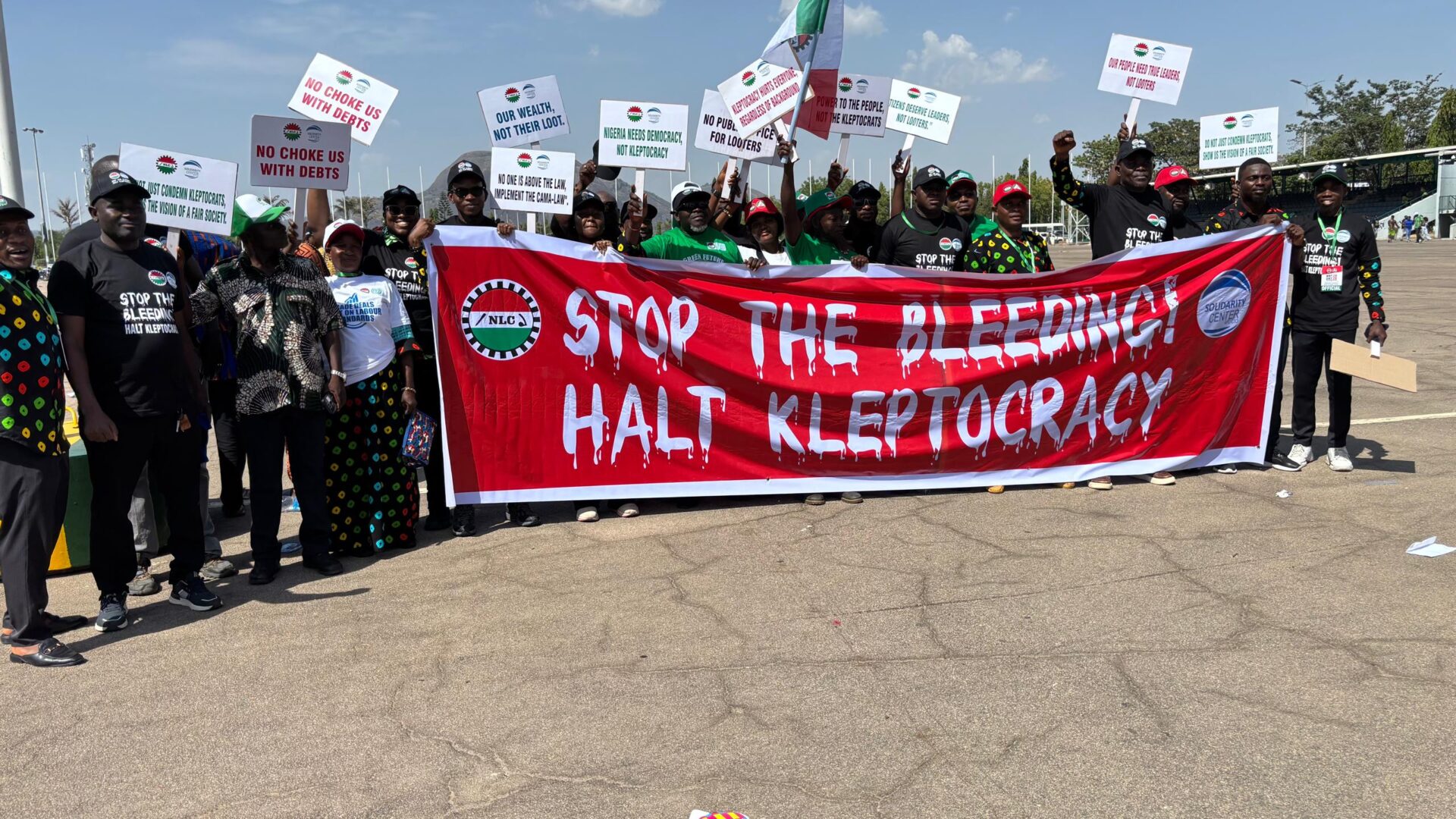
As part of labour’s response to the challenge, Ajaero announced the launch of a nationwide campaign tagged “Stop the Bleeding,” aimed at mobilising workers and citizens to demand accountability, transparency, and responsible governance.
The campaign, he said, would seek to expose corruption, recover stolen resources, and promote reforms that safeguard public funds.
“The labour movement must rise as a watchdog for accountability,” he said. “Until we stop the haemorrhage of public resources, our nation cannot heal.”
The address formed part of organised labour’s broader critique of the economic and social conditions facing Nigerian workers, with labour leaders insisting that insecurity, poverty, corruption, and weak governance remain major obstacles to achieving decent work and sustainable national development.