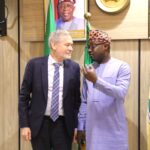
The Director General, Bureau of Public Procurement (BPP), Dr. Adebowale Adedokun has declared that ongoing reforms in the Bureau are responsible for the changes being experienced in procurement procedures across Nigeria.
The DG made the assertion at the inaugural hosting of “The Procurement Evolution” workshop, Thursday in Abuja. The theme of the event, which coincided with the 19th anniversary of the BPP, was “Honouring the Past, Powering the Future.”
According to the DG, the support he got from President Bola Tinubu to review procurement thresholds across the Federal Public Service, the strengthening of compliance enforcement, and the reinforcement of monitoring mechanisms and compliance reviews across procuring entities, were major milestones recorded under the reform programme.
The DG disclosed that “the revised thresholds were introduced to reflect present economic realities, inflationary pressures, changing market conditions, and the need to accelerate budget implementation.”
He continued, “Crucially, as a direct consequence of these upwardly revised thresholds, the Federal Executive Council (FEC) has been significantly unburdened from routine contract approvals. The FEC rarely meets to deliberate on contract awards anymore, shifting its executive focus instead toward high-level policy discussions and strategic national governance.
“By delegating more procurement responsibilities to appropriate Ministerial and Parastatal Tenders Boards and Accounting Officers, the government has significantly reduced unnecessary bottlenecks while preserving transparency and accountability. The objective is simple. Procurement processes must remain compliant, but they must also be responsive, efficient and capable of supporting timely project delivery,” he stated.
Adedokun listed what he called the “National Procurement Transformation Strategy” and “Rigid Variation Controls,” which includes a directive from President Bola Tinubu that all contract variations be explicitly reviewed and approved by the BPP to curtail fiscal inflation, as part of the reforms
The BPP boss spoke about the gains reaped from the bureau’s debarring policy of sanctioning and blacklisting erring contractors, its “Fiscal Accountability, Monitoring, and Data Transparency, and co-developing a robust monitoring and evaluation framework between the BPP and the Budget Office of the Federation to sync procurement with budgetary allocations.”
He referenced “Enhanced MDAs Disclosures Enforcing the mandatory monthly publication of contract awards alongside comprehensive quarterly performance reports by all Ministries, Departments and Agencies, Price Intelligence and Benchmarking – Deploying precise market analysis tools to safeguard public funds and ensure maximum value-for-money.”
The BPP boss spoke about shat he called the NAPOMS Deployment, which involved launching a centralized, national platform for automated asset, project monitoring and absolute accountability; Digital Ecosystems and Modern Procurement Platforms, as well as Digital Procurement Platforms Automating core operational processes, reducing human interference and drastically minimizing corruption risks.
He disclosed that the bureau was using Nigeria E-Market policy to establish a secure, digital marketplace designed to foster healthy market competition and cross-sector transparency; upgrade CCSP Database, stressing, “public procurement must be governed not only by rules but also by consequences for violations.”
The “Nigeria First Policy,” which outs indigenous businesses are an advantage, stated the DG, has been yielding results in the automobile, ICT, renewable energy, textile and garments Industries, as well as in agriculture and agro-allied industries.
BPE, said Adedokun, has led the vanguard in empowering Nigerians with education and knowledge.
He listed Nigeria Procurement Certification Programme (NCPC), which he explained, seeks to elevate professionalism by standardizing certification metrics for officer validation and skill development.
“Academic Mainstreaming via SPESSE Establishing specialized undergraduate degree courses in Sustainable Procurement, Environment, and Social Standards across six (6) distinct University Centres of Excellence. (Ahmadu Bello University (ABU), Zaria, University of Lagos (UNILAG), Lagos, University of Benin (UNIBEN), Benin City, Abubakar Tafawa Balewa University (ATBU), Bauchi, Federal University of Technology, Owerri (FUTO) and Joseph Sarwuan Tarka University (formerly FUAM), Makurdi),” he stated.
He stated, “Executive-Backed Career Mobility Solidifying the professional cadre where the BPP is explicitly mandated by Mr. President to direct the recruitment, promotion, institutional mobility, continuous training and career discipline of Procurement Officers.
“These are not mere policies; they are victories for Nigeria. They are proof that when leadership is visionary and support is unwavering, reforms thrive,” he added.
The BPP boss admitted that, while challenges had been strewn on the path, support from President Tinubu helped the bureau surmount most of the challenges.
“As we celebrate today, let us remember that procurement reform is not an end in itself. It is a means to an end – a Nigeria where public resources are used judiciously, where citizens trust their government and where development accelerates because corruption is curtailed,” he declared.