By Chuks Oyema-Aziken
The Defence Headquarters (DHQ) has reaffirmed its commitment to strengthening collaboration with defence journalists as part of efforts to combat misinformation, disinformation and hostile propaganda capable of undermining national security.
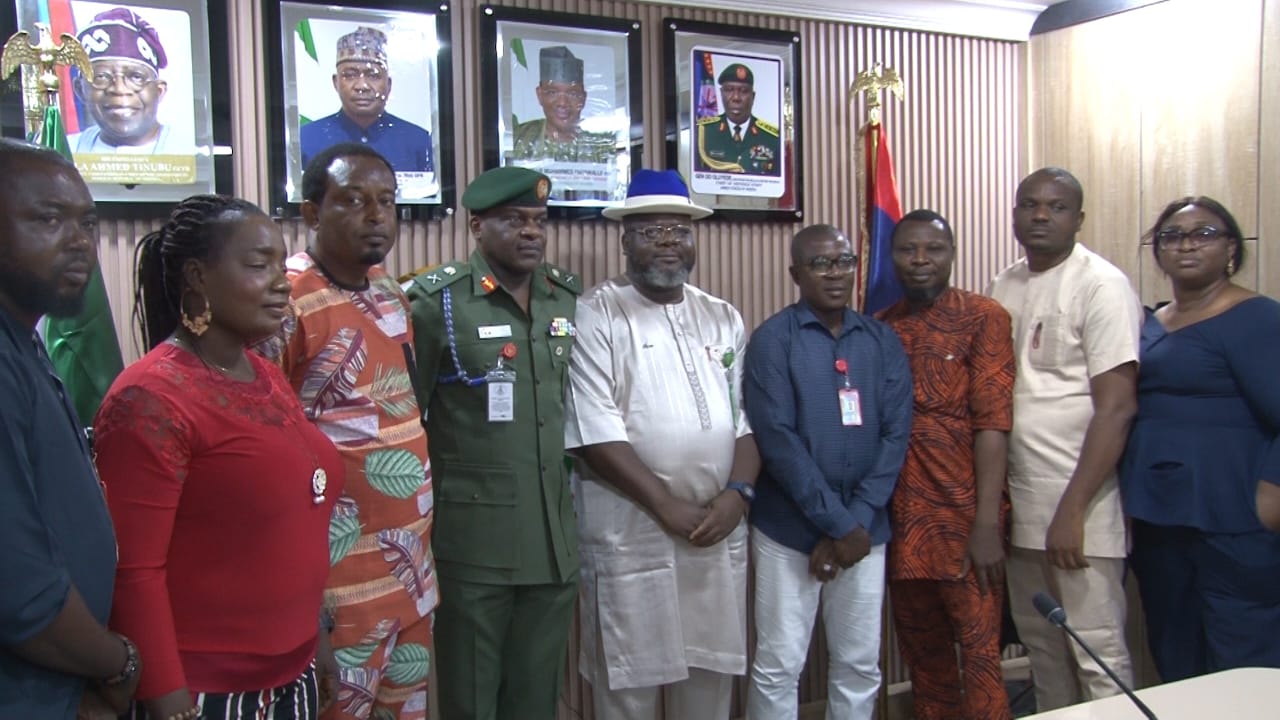
The Director of Defence Media Operations, Major General Michael Onoja, gave the assurance while receiving the newly elected executive members of the Defence Correspondents’ Association of Nigeria (DECAN), led by its President, Sunday Odita, during a courtesy visit to the Directorate in Abuja.
Onoja said the Armed Forces of Nigeria remained committed to transparency and accurate dissemination of information, stressing that the Directorate of Defence Media Operations would continue to maintain an open-door policy for journalists seeking clarification on military activities.
According to him, while the military is willing to engage openly with the media, certain operational details may not always be disclosed immediately due to security concerns.
He explained that premature release of sensitive information could jeopardise ongoing operations and endanger personnel, noting that such decisions are guided by operational security considerations rather than secrecy.
The defence spokesperson described media operations as a critical aspect of modern warfare, saying effective communication helps shape public perception, sustain confidence in the Armed Forces and counter false narratives propagated by hostile elements.
He noted that the military places great importance on its relationship with the media and remains committed to ensuring that only verified and factual information reaches the public.
Expressing concern over the growing spread of misinformation and disinformation, particularly through social media platforms, Onoja called for closer cooperation between journalists and the military to safeguard national security.
He stressed that the media should be regarded as partners rather than adversaries, adding that responsible journalism plays a vital role in helping Nigerians understand the efforts and sacrifices of military personnel across various theatres of operation.
The senior military officer also urged journalists to promote national cohesion through balanced reporting and avoid publications capable of deepening existing divisions within the country.
Onoja conveyed the appreciation of the Chief of Defence Staff, Olufemi Oluyede, for the contributions of defence correspondents toward balanced and objective coverage of military activities.
He added that the military leadership remains open to suggestions and initiatives that would further strengthen cooperation between the Armed Forces and the media.
Earlier, DECAN President Odita described the relationship between defence correspondents and the Defence Headquarters as a strategic partnership designed to enhance national security and strengthen public confidence in the Armed Forces.
He said defence correspondents complement the efforts of troops on the battlefield by informing, educating and shaping public understanding through accurate and responsible reportage.
Odita commended the Directorate of Defence Media Operations for maintaining an inclusive engagement policy, particularly the decision to facilitate visits by more than 100 defence correspondents to military operational theatres across the country earlier this year.
According to him, the field visits provided journalists with first-hand knowledge of military operations, thereby improving the accuracy, depth and credibility of defence reporting.
The DECAN president appealed for more regular operational briefings, arguing that sustained interaction between military authorities and journalists would help counter misinformation, disinformation and hostile propaganda.
He also disclosed that the association was concluding arrangements for the launch of its official publication, The Defence Correspondent, which will document and showcase the activities of the Defence Headquarters, the Armed Forces and other defence-related institutions.
Odita further appealed to the Defence Headquarters to establish a dedicated Defence Correspondents’ Press Centre to serve as a central hub for journalists covering defence and security matters.
He said such a facility would improve media coordination, strengthen civil-military relations and provide a conducive working environment for defence correspondents.
The meeting ended with both the Defence Headquarters and DECAN reaffirming their commitment to deeper collaboration in promoting credible information, national security and public trust.