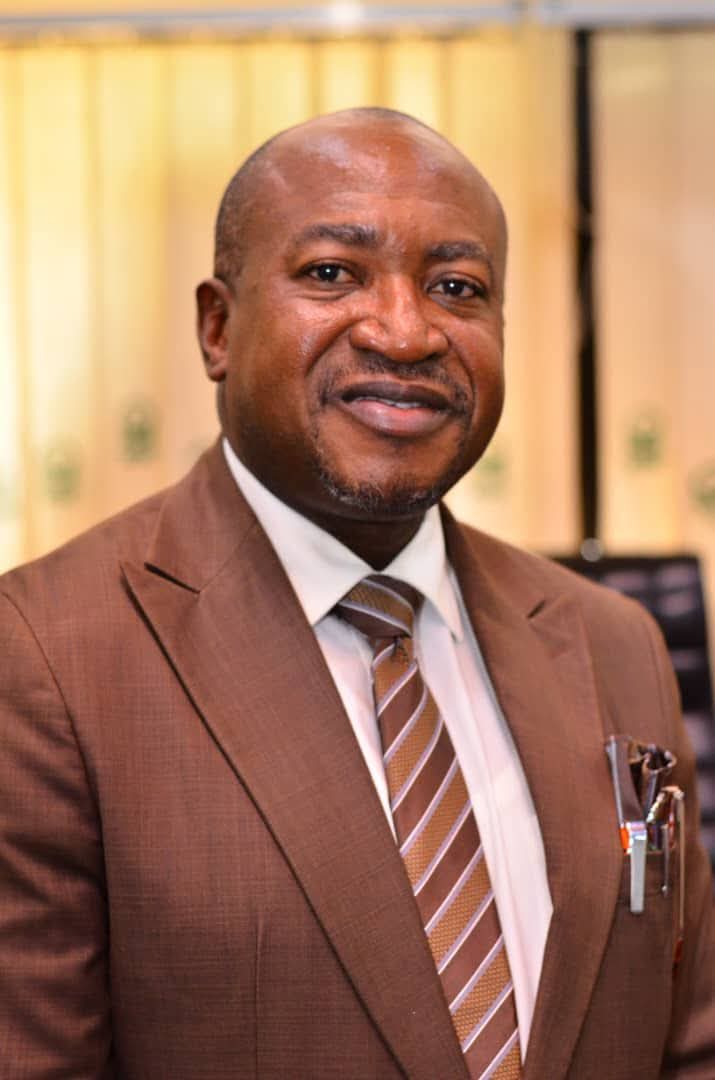
By Adagher Tersoo,
When the Federal Government appointed Prof. Hakeem Fawehinmi as the Vice-Chancellor of the University of Abuja—now officially renamed Yakubu Gowon University—the appointment was widely seen as the arrival of an accomplished administrator with a proven record of academic excellence, institutional leadership and strategic reforms.
Six months into his tenure, the question on the minds of staff, students, policymakers and education stakeholders is straightforward: What direction is the university taking under Prof. Fawehinmi, and what does his leadership mean for the future of one of Nigeria’s most strategically located federal universities?
The answer lies not merely in speeches and policy documents, but in a carefully unfolding blueprint anchored on academic excellence, institutional reforms, research innovation, global partnerships, infrastructure renewal, digital transformation and a student-centred administration.
A Leader Built for Institutional Transformation
Prof. Fawehinmi did not assume office as a conventional academic administrator. He arrived with over three decades of experience spanning teaching, research, university governance and international academic collaboration.
His credentials are formidable.
Having served as Head of Department, Dean of the Faculty of Basic Medical Sciences, Deputy Vice-Chancellor (Academic) at the University of Port Harcourt and later Vice-Chancellor of the Nigerian British University, he understands the intricate balance between academic administration and strategic institutional development.
His background as a professor of Clinical Anatomy and Biomedical Anthropology has also shaped a leadership philosophy rooted in evidence, precision and measurable outcomes.
Those close to him describe him as a consensus builder who believes universities should function like knowledge-driven corporations—efficient, accountable and globally competitive.
The Six-Month Agenda
From his inaugural address, Prof. Fawehinmi outlined what many observers have described as a “renewal agenda” built around several interconnected priorities:
Restoring academic excellence.
Strengthening research and innovation.
Modernising infrastructure.
Deepening digital transformation.
Improving staff welfare.
Enhancing student experience.
Expanding international collaborations.
Promoting financial sustainability.
Building stronger university-industry partnerships.
Rather than introducing isolated reforms, the administration appears to be pursuing an integrated development model.
Academic Excellence at the Centre
For Prof. Fawehinmi, academic quality remains the university’s primary mandate.
His administration has reportedly intensified efforts to strengthen quality assurance mechanisms, improve curriculum delivery and ensure compliance with National Universities Commission (NUC) standards.
Faculty members have been encouraged to embrace interdisciplinary teaching while academic departments are being challenged to review programmes in response to emerging global realities such as artificial intelligence, biotechnology, digital health, renewable energy, climate science and entrepreneurship.
The objective is simple: produce graduates who are employable, innovative and globally competitive.
Research as the University’s Currency
One of the recurring themes of Prof. Fawehinmi’s leadership is that universities must become centres of knowledge production rather than mere teaching institutions.
Having published over 100 scholarly articles, authored books and supervised numerous postgraduate researchers, he appreciates the importance of research visibility.
His administration has therefore placed renewed emphasis on:
attracting international research grants;
increasing publication output;
strengthening postgraduate education;
commercialising research findings;
promoting innovation and patent development.
His own invention of the AMRG Anthropometry Chair, which earned a Nigerian patent, serves as an example of how academic research can generate practical solutions.
Many expect similar innovation ecosystems to emerge within Yakubu Gowon University.
Digital University Vision
Globally, universities are increasingly embracing digital learning and smart campus technologies.
Prof. Fawehinmi appears determined not to leave the university behind.
Within six months, discussions around digital governance, electronic records management, improved ICT infrastructure and enhanced online learning systems have gained momentum.
The long-term ambition is a university where admissions, examinations, financial administration, research management and student services operate seamlessly through digital platforms.
Such reforms could significantly improve efficiency while reducing bureaucratic delays.
Infrastructure Renewal
Like many Nigerian public universities, Yakubu Gowon University faces infrastructure deficits accumulated over decades.
Rather than pursuing cosmetic projects, the administration has reportedly prioritised strategic infrastructure planning.
Areas receiving attention include:
lecture theatres;
laboratories;
research facilities;
medical education infrastructure;
students’ hostels;
campus roads;
security architecture;
water and power systems.
The emphasis appears to be on sustainability rather than short-term interventions.
Staff Development
University development depends largely on human capital.
Prof. Fawehinmi’s career demonstrates deep commitment to mentoring academics.
Having supervised more than 100 undergraduate projects, 15 MSc dissertations and 13 PhD/MD theses, he understands talent development.
Consequently, staff capacity building occupies a central position within his reform agenda.
Young academics are being encouraged to pursue doctoral training, international collaborations and research grants while administrative staff are expected to benefit from continuous professional development programmes.
Student-Centred Administration
A defining feature of the administration has been its emphasis on student engagement.
Students increasingly expect universities to provide more than degrees.
Issues such as mental health support, entrepreneurship, employability, sports, innovation hubs and leadership development have become integral components of modern university education.
The administration’s policy direction suggests an intention to make students active partners in institutional development rather than passive recipients of education.
Global Partnerships
Internationalisation remains another major pillar of Prof. Fawehinmi’s blueprint.
Throughout his academic career, he has built relationships with universities across Africa, Europe, North America and the Middle East.
His fellowship of the Royal Anthropological Institute and experience as a Visiting Researcher at University College London reflect longstanding international engagement.
Observers believe these networks could facilitate:
staff exchanges;
joint degree programmes;
collaborative research;
international grants;
student mobility;
global visibility for the university.
Financial Sustainability
Perhaps the greatest challenge facing Nigerian universities today is funding.
Government allocations alone can no longer sustain world-class institutions.
Prof. Fawehinmi has previously demonstrated capacity to attract competitive grants, facilitate endowments and establish strategic partnerships.
His administration is expected to expand internally generated revenue through consultancy services, research commercialisation, alumni engagement, philanthropy and industry partnerships while maintaining transparency and accountability.
Strengthening Town-Gown Relationships
Another defining aspect of his leadership philosophy is community engagement.
Throughout his career, he has championed stronger relationships between universities and surrounding communities.
Under his leadership, Yakubu Gowon University is expected to become a major development partner for government, industry and civil society through policy research, innovation and community-based solutions.
Challenges Ahead
Despite the optimism surrounding the administration, significant hurdles remain.
The university must contend with:
inadequate funding;
ageing infrastructure;
rising student enrolment;
staff welfare concerns;
global competition;
rapid technological change;
pressure to improve international rankings.
Addressing these challenges will require sustained government support, effective stakeholder engagement and consistent implementation of reforms.
The Road Ahead
Six months is too short a period to fully assess any vice-chancellor’s performance. Institutional transformation in higher education typically unfolds over several years.
Nevertheless, the early direction of Prof. Hakeem Fawehinmi’s administration suggests a deliberate effort to reposition Yakubu Gowon University as a modern, research-driven and globally connected institution.
His combination of scholarly achievement, administrative experience and strategic vision provides a solid foundation for reform. Whether this vision ultimately translates into lasting institutional transformation will depend on continuity, adequate funding and the collective commitment of staff, students, alumni and government.
If the current trajectory is sustained, the university could emerge as one of Nigeria’s leading centres of teaching, research and innovation, fulfilling its mandate as the nation’s capital university and contributing significantly to national development.
Adagher Tersoo, a Media Manager and Public Affairs Analyst, writes from Abuja.