By Mercy Aikoye
The House of Representatives has moved to check the growing occupation of Federal bridge corridors in Lagos State, ordering an investigation into unauthorised commercial activities and structures beneath Eko Bridge and other bridges.
The House mandated its Committees on Works and Public Assets to investigate the legality of containers, warehouses, markets, workshops, makeshift structures and other commercial establishments operating within the bridges’ right-of-way.
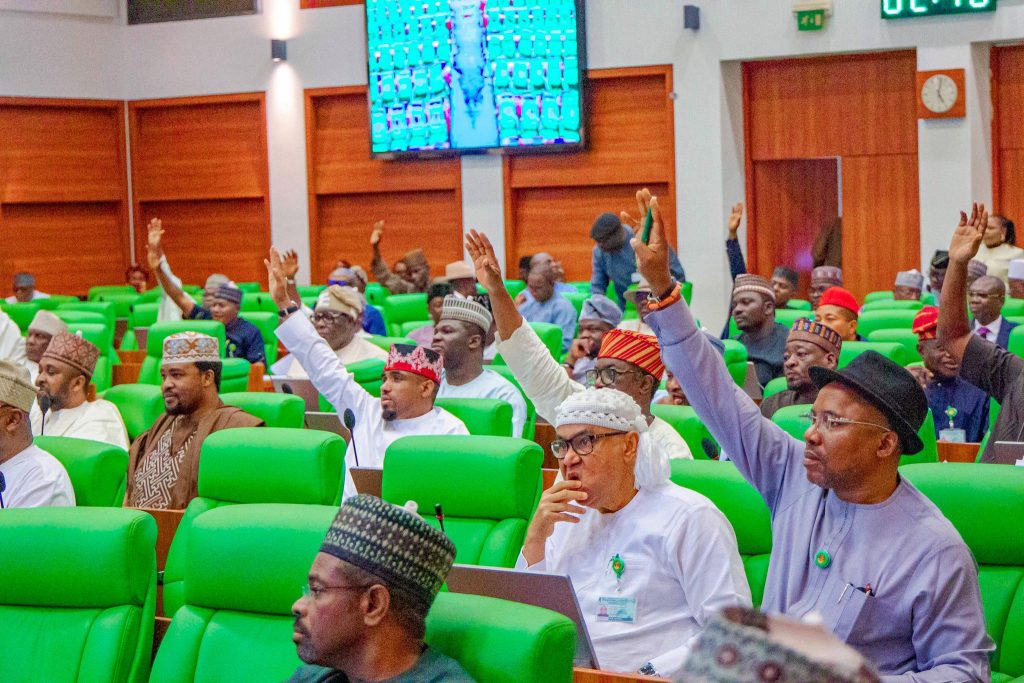
The resolution followed the adoption of a motion of urgent public importance sponsored by the member representing Surulere II Federal Constituency of Lagos State, Hon. Lanre Okunlola, during plenary presided over by Deputy Speaker Benjamin Kalu.
The lawmakers expressed concern that the encroachment could compromise the structural integrity of critical infrastructure, obstruct routine engineering inspections and expose commuters and adjoining communities to safety risks.
They particularly raised concerns about activities around Eko Bridge, where alleged encroachment near its foundations had reportedly damaged critical structural components and necessitated emergency engineering intervention.
The House noted that continued occupation of areas beneath and around Federal bridges could undermine their lifespan, impede maintenance and emergency repairs, and obstruct future expansion projects.
It also questioned whether operators of the commercial establishments had obtained valid approvals from the appropriate Federal authorities, directing the committees to establish the legality of the structures and activities.
To facilitate the investigation, the House directed the Federal Ministry of Works, the Federal Roads Maintenance Agency (FERMA), the Nigerian Inland Waterways Authority, where applicable, and relevant Lagos State physical planning authorities to submit documents relating to the affected locations.
The documents are expected to include approved engineering drawings, survey plans, right-of-way maps, occupancy approvals and other records covering developments beneath and around the bridges. The committees will also examine compliance with the Federal Highways Act, applicable planning regulations and relevant guidelines of the Federal Ministry of Works.
Under the resolution, the Committee on Works is to determine the legality of the structures and commercial activities, while the Committee on Public Assets will establish whether public assets have been compromised, occupied, leased, alienated or used in violation of existing laws. The latter committee will also identify individuals, agencies or organisations responsible for any established breaches.
The House called for appropriate enforcement measures, including the removal of structures found to be illegally occupying Federal right-of-way corridors. It also proposed long-term measures to protect and monitor Federal bridges nationwide, with the committees expected to submit their reports within six weeks for further legislative action.
The lawmakers attributed the proliferation of unauthorised developments partly to possible gaps in coordination among the Federal Ministry of Works, FERMA, the Lagos State Government and other relevant agencies.
The proposed probe comes amid previous structural concerns involving Eko Bridge. In May 2026, the Minister of Works, David Umahi, announced emergency intervention following reported damage linked to illegal sand-mining activities around the bridge. He disclosed that a barge had struck a pile cap, damaging supporting piles and prompting plans for urgent repairs. The Federal Government subsequently announced the temporary closure of one carriageway to facilitate the intervention.
The investigation is expected to establish the status of commercial establishments operating within the affected corridors, determine whether the required approvals were obtained and recommend measures to prevent further encroachment. Its findings could also strengthen oversight of activities beneath other Federal bridges in Lagos State, particularly where unauthorised occupation threatens access for inspections, repairs and routine maintenance.