By Mercy Aikoye
The Nigerian Airspace Management Agency (NAMA) on Thursday called on the House of Representatives to raise its share of the statutory five per cent aviation revenue pool from 22 per cent to 56 per cent, citing rising operational costs and the increasing financial demands of managing Nigeria’s air navigation infrastructure.
The request was made by the Managing Director of NAMA, Engr. Farouk Ahmed Umar, during a public hearing organised by the House Committee on Aviation on proposed amendments to aviation sector laws.
Umar told lawmakers that NAMA’s responsibilities had expanded significantly over the years while the agency’s funding had remained inadequate, despite its central role in ensuring the safety of flight operations across the country.
He explained that NAMA, as Nigeria’s sole Air Navigation Service Provider, is responsible for providing communication, navigation, surveillance and air traffic management services before, during and after every flight, making it one of the most critical institutions in the aviation sector.
According to him, the agency currently receives only 22 per cent of the statutory five per cent aviation revenue pool, a figure he described as insufficient to sustain modern air navigation infrastructure and meet growing operational demands.
He said increasing NAMA’s allocation to 56 per cent would not raise the existing five per cent statutory charge on passengers but would merely redistribute the available revenue to better reflect the agency’s responsibilities.
Umar disclosed that NAMA’s expenditure exceeded ₦43 billion in 2023, comprising about ₦21 billion in personnel costs, over ₦12 billion in capital projects and more than ₦10 billion in overhead expenses.
He added that while operating costs had risen sharply due to inflation, foreign exchange fluctuations, electricity tariffs, software licensing, imported equipment and specialised training, the agency’s navigation charge had remained unchanged at ₦11,000 per flight since June 2008.
According to him, the existing funding model has forced the agency to absorb rising operational costs without a corresponding increase in revenue, placing additional pressure on infrastructure critical to aviation safety.
The NAMA boss also warned that the Total Radar Coverage of Nigeria (TRACON) system requires significant investment for renewal and modernisation as ageing equipment becomes increasingly expensive to maintain and manufacturers gradually phase out support for obsolete components.
He further noted that the global aviation industry is rapidly transitioning to digital and satellite-based technologies, requiring substantial investment in performance-based navigation, digital aeronautical information systems, integrated flight data platforms, cybersecurity and specialised personnel.
Beyond revenue allocation, Umar urged the National Assembly to harmonise existing aviation laws, noting that while the Civil Aviation Act allocates 22 per cent of the statutory fund to NAMA, the agency’s establishing Act provides for 23 per cent, creating legal inconsistencies that should be corrected.
He also requested that obstacle assessment services and WGS-84 aeronautical surveys carried out by NAMA be recognised as chargeable technical services, arguing that the agency performs specialised surveys, obstacle analysis and flight procedure assessments that currently attract no direct remuneration.
While acknowledging that redistributing the revenue pool could affect other aviation agencies, Umar maintained that allocations should be based on statutory responsibilities, audited operational costs and the safety risks managed by each institution rather than historical percentages.
He assured lawmakers that NAMA would support stronger accountability measures, including automated revenue collection and remittance, quarterly disclosure of receipts and expenditure, annual independent audits and transparent procurement processes.
Also at the hearing, the African Aviation and Aerospace University (AAAU), Abuja, sought inclusion as a statutory beneficiary of the five per cent Ticket Sales Charge (TSC), proposing that at least 10 per cent of the revenue be dedicated to aviation manpower development, research and innovation.
Presenting the university’s position, Acting Vice-Chancellor, Mustapha Abdullahi, said the institution was established to train highly skilled professionals required for Nigeria’s aviation industry and should receive statutory funding to support its mandate.
He argued that sustainable aviation development depends not only on infrastructure but also on continuous investment in human capital, including air traffic managers, aeronautical engineers, safety specialists, airport managers, meteorologists and aerospace scientists.
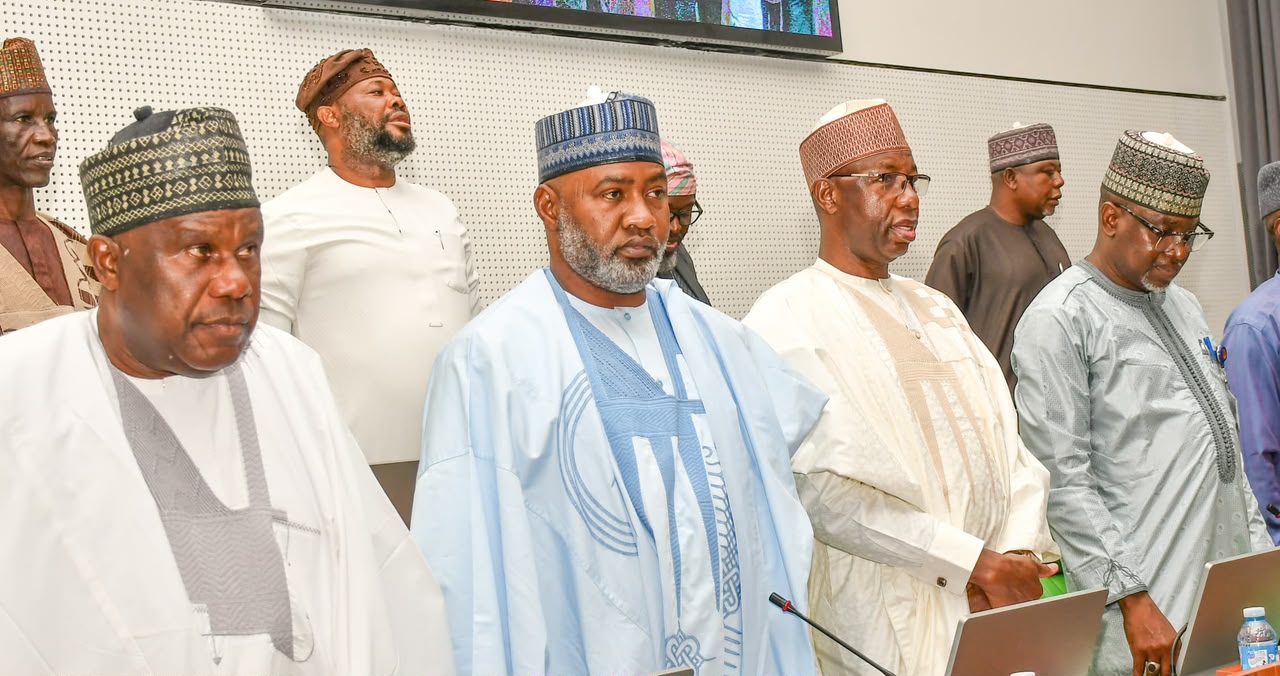
Speaking at the hearing, Speaker of the House of Representatives, Hon. Abbas Tajudeen, reaffirmed the commitment of the 10th National Assembly to strengthening the financial framework of Nigeria’s aviation industry to improve safety, enhance regulatory capacity and boost investor confidence.
Chairman of the House Committee on Aviation, Hon. Abdullahi Garba, said the proposed legislative amendments are intended to strengthen the financial and institutional framework of aviation agencies, improve transparency and enhance service delivery across the sector.