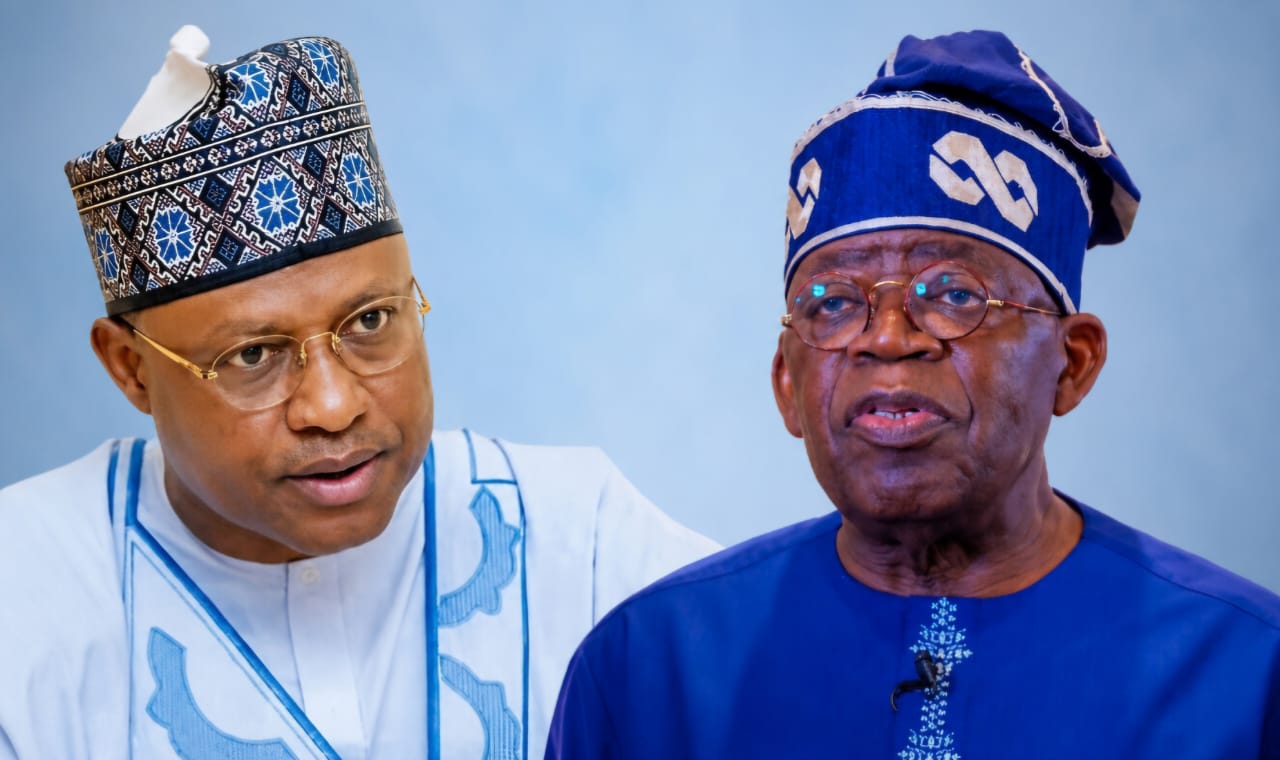
A pro-democracy group, the Uba Sani Back2Back (USB2B) Movement has outlined 15 major projects, policy interventions and economic indicators it says should shape the debate over President Bola Ahmed Tinubu’s re-election in 2027, citing infrastructure development, agriculture, education, healthcare and economic reforms.
The Movement’s position, in a statement signed by Strategic Communications Director–Hadiza Mohammed.
According to USB2B, the first reason is the renewed speed on the Abuja–Kaduna–Zaria–Kano Expressway project, a strategic transport corridor linking the Federal Capital Territory with major commercial centres in the North-West. The group said improved connectivity could facilitate trade, ease movement and strengthen regional economic integration.
The second reason, according to USB2B, is the proposed Akwanga–Jos–Bauchi–Gombe–Biu–Maiduguri Super Highway, which the group said could improve connections across parts of the North-Central and North-East, opening up communities and supporting the movement of people and goods.
The third reason, the group noted, is the Sokoto–Badagry Superhighway, a major proposed corridor designed to link the North-West with the South-West. USB2B said the project could strengthen interregional commerce and improve the transportation of agricultural produce and other goods.
The group said the fourth reason is the Trans-Saharan Route, which it identified as part of the administration’s broader infrastructure and regional connectivity agenda. According to the Movement, strategic transport links can expand commercial opportunities and improve access between communities and economic centres.
USB2B went on to say that the fifth reason is the reconstruction of the 122-kilometre Kaduna–Mando–Birnin Gwari Road, a major project intended to reconnect communities and improve transportation along a corridor that has endured years of neglect. The group said the road could support agriculture, commerce and movement, while its implementation would be important to communities that have long awaited improved connectivity.
The sixth reason, according to the Movement, is the Federal Government’s wider highway construction and rehabilitation programme across Northern Nigeria. USB2B said road infrastructure remains critical to regional development because it connects farmers and businesses to markets, reduces transport barriers and supports economic activity.
The Movement described the seventh reason as the proposed Kaduna Light Rail Project, which it said could mark a significant step towards modernising transportation in the state. USB2B argued that improved mass transit could ease urban movement and support commercial activity, while actual delivery would determine the project’s long-term impact.
The eighth reason, the group said, is the proposed Kano Light Rail Project. According to USB2B, the initiative could help address transportation challenges in one of Northern Nigeria’s major commercial centres, with the potential to improve urban mobility and support business activities.
The ninth reason is federal support for Kaduna’s Special Agro-Industrial Processing Zone, the Movement said. USB2B maintained that agro-industrial investment could strengthen agricultural value chains by linking farmers with processors and markets, creating opportunities for businesses and helping to increase the value derived from agricultural production.
The group identified fertiliser distribution and other federal agricultural interventions as the tenth reason, arguing that support for farmers is essential to food production and food security. USB2B said the impact of such programmes should be reflected in improved access to farm inputs, stronger productivity and better opportunities for farming communities.
The eleventh reason, according to the Movement, is the establishment of the Federal University of Applied Sciences in Kachia, Southern Kaduna. The group said the institution would expand access to higher education and specialised learning, creating opportunities for young people and strengthening the state’s educational landscape.
USB2B said the twelfth reason is the expansion of federal healthcare provision in Kaduna State, including the Federal Medical Centre in Kafanchan. The Movement said stronger federal medical facilities could improve access to specialist services, with their ultimate impact depending on staffing, equipment and the quality of care available to patients.
The thirteenth reason, the group noted, is the Presidential Initiative to Unlock the Healthcare Value Chain, which seeks to strengthen domestic pharmaceutical manufacturing and local healthcare production. USB2B said expanding local capacity could improve the availability of essential medical products and reduce dependence on imports.
The group identified the Nigerian Education Loan Fund (NELFUND) as the fourteenth reason, saying the programme provides eligible students in public tertiary institutions with financial support to pursue their education. According to USB2B, the initiative addresses a major barrier to higher education by giving eligible students another avenue to finance their studies.
The fifteenth reason, the Movement said, is the broader performance of the Nigerian economy, including reported growth in gross domestic product, easing inflation from its December 2024 peak and improved foreign reserves. USB2B argued that these indicators should form part of the national conversation on the administration’s economic record, while acknowledging that their significance must be assessed alongside the cost of living and the purchasing power of households.
The Movement said the 15 areas collectively explain its position on Tinubu’s re-election, placing particular emphasis on infrastructure, agricultural development, educational opportunities, healthcare and economic management.
USB2B maintained that the federal projects and programmes cited in its assessment could have important implications for Northern Nigeria, particularly where they improve connectivity, expand public services and create opportunities for farmers, businesses and young people.
As political discussions ahead of the 2027 general elections gather momentum, the projects highlighted by the Movement are likely to feature in wider debates over the administration’s record. Their ultimate significance will depend on verified funding, implementation, completion and measurable improvements in the lives of Nigerians.