…Identifies Kaduna as North-West Development Hub
The Tinubu–Uba Sani Consolidation Forum (TUSCOF) has commended the growing cooperation between President Bola Ahmed Tinubu’s administration and the seven North-West state governments, alongside international development partners, through strategic programmes and interventions aimed at accelerating socioeconomic development across the region.
The commendation was contained in a statement jointly signed by the Forum’s National Chairman, Malam Mohammed Jalal Sada, and its Director of Media and Publicity, Nasir Dambatta.
The group said the expanding network of Federal–State collaborations provides an important framework for addressing shared regional challenges, strengthening public institutions, stimulating economic activities and improving citizens’ quality of life.
TUSCOF identified the Nigeria Health Sector Renewal Compact, HOPE-GOV, HOPE-EDU, HOPE-PHC, the Universal Basic Education matching-grant framework and the Sustainable Power and Irrigation for Nigeria (SPIN) programme as important nationwide interventions offering opportunities for coordinated development across Jigawa, Kaduna, Kano, Katsina, Kebbi, Sokoto and Zamfara states.
The Forum noted that the North-West is also benefiting from major regional infrastructure and agricultural initiatives, including the Kaduna–Kano–Jigawa–Katsina–Maradi Railway Project, the North-West Development Commission’s regional agricultural transformation framework and the SPIN irrigation programme, which identifies specific schemes across all seven states.
In Jigawa State, TUSCOF highlighted the Federal Government’s railway infrastructure intervention, particularly the Kano–Dutse corridor, as an important connectivity project with significant implications for regional trade and economic integration.
It also identified the Gari Irrigation Project, involving the Federal Ministry of Water Resources and Sanitation, as a significant agricultural partnership aimed at improving irrigation management, strengthening farmers’ associations and promoting food security. The state’s Warwade irrigation scheme is also listed under the SPIN programme.
Kano State also features prominently in the regional infrastructure agenda, with the Federal Government’s Renewed Hope City housing project comprising 1,500 housing units.
The Federal Government has also announced plans to support light rail development in Kano, while the Kano–Maradi railway project is expected to strengthen regional transportation and commercial connectivity. The state’s Jakara irrigation scheme is also among those identified under SPIN.
In Katsina State, the Forum highlighted the National Agricultural Development Fund’s partnership with the State Government, OCP Africa, The Infrastructure Bank and the Sokoto-Rima River Basin Development Authority to establish a 50-hectare all-season demonstration farm at Sabke Dam.
The initiative is designed to promote year-round farming, agricultural training and the commercial utilisation of existing irrigation infrastructure. Katsina’s Danja irrigation scheme is also listed under SPIN.
The Forum further noted development partnerships involving Katsina State and the United Nations Development Programme (UNDP), covering 152 housing units for internally displaced persons in Jibia, a Climate Peace Hub, cattle market rehabilitation and solar mini-grid energy infrastructure.
According to the group, these interventions link housing, climate resilience, renewable energy and livelihood recovery.
For Kebbi State, TUSCOF identified the Federal Government’s 1,068-kilometre Sokoto–Badagry Superhighway as a major infrastructure intervention with significant implications for transportation, trade and economic activities across the North-West.
It also highlighted the state’s Birnin Kebbi irrigation scheme under SPIN as an opportunity to strengthen agricultural production and improve water resource utilisation.
In Sokoto State, the Forum identified the Federal Government’s Renewed Hope Cities housing programme and the Kware irrigation scheme under SPIN as important components of the broader development agenda.
The housing initiative forms part of the Federal Government’s efforts to expand access to decent accommodation, while irrigation development offers opportunities to improve agricultural productivity.
TUSCOF also identified Zamfara State’s Natu irrigation scheme under SPIN as an important intervention for strengthening agricultural production, improving water management and expanding opportunities for farmers.
Against this wider regional development landscape, the Forum identified Kaduna State as an important development hub in the North-West, citing its growing portfolio of strategic Federal–State partnerships spanning education, healthcare, agricultural industrialisation, enterprise development, transportation and electricity infrastructure.
In education, TUSCOF highlighted the Reaching Out-of-School Children programme, involving the Federal Government, Kaduna State Government and international development partners, as a significant intervention aimed at expanding educational access and bringing vulnerable children into the formal learning system.
It also identified HOPE-EDU and the Universal Basic Education matching-grant framework as important instruments for strengthening basic education infrastructure and improving learning outcomes.
On enterprise development, the Forum commended the SMEDAN–Kaduna MSME development partnership, describing it as an important platform for strengthening small businesses, supporting entrepreneurship and expanding the productive capacity of the state’s economy.
The Forum further welcomed the Federal–State agreement to convert the Sir Patrick Ibrahim Yakowa Memorial Hospital in Kafanchan into a Federal Medical Centre, describing the proposed transition as an opportunity to strengthen specialist healthcare delivery and improve access to advanced medical services in Southern Kaduna and neighbouring communities.
In agriculture, TUSCOF identified the Special Agro-Industrial Processing Zones programme as a potentially transformative intervention for Kaduna and the wider region, given the North-West’s agricultural potential and the need to move beyond primary production towards processing, value addition, industrial employment and stronger agricultural supply chains.
The Forum also highlighted the Kaduna metropolitan two-corridor light rail initiative, which has attracted Federal Government support, as an ambitious infrastructure project with the potential to improve urban mobility, ease transportation pressures and support the long-term development of the Kaduna metropolis.
TUSCOF noted that the establishment of the North-West Development Commission provides an additional institutional framework for coordinating regional development priorities.
It said the Commission’s engagement with agricultural research and development institutions, including IITA, ICRISAT, HarvestPlus, the Centre for Dryland Agriculture and the Institute for Agricultural Research, represents an important step towards developing a coordinated agricultural transformation and food security framework for the region.
The Forum observed that the real value of these partnerships lies not merely in policy announcements, signed agreements or project launches but in successful implementation, measurable outcomes and tangible benefits to ordinary citizens.
It therefore urged relevant Federal and State institutions to sustain collaboration, strengthen implementation mechanisms, ensure transparency and establish measurable performance indicators that would enable citizens to assess progress.
TUSCOF particularly encouraged the seven North-West states to maximise the opportunities offered by Federal development frameworks, strengthen institutional capacity and develop complementary policies capable of attracting investments and accelerating the delivery of critical infrastructure.
The Forum maintained that effective intergovernmental relations should transcend political affiliations, stressing that development partnerships must ultimately be judged by their capacity to improve citizens’ lives, create employment, strengthen public institutions and expand economic opportunities.
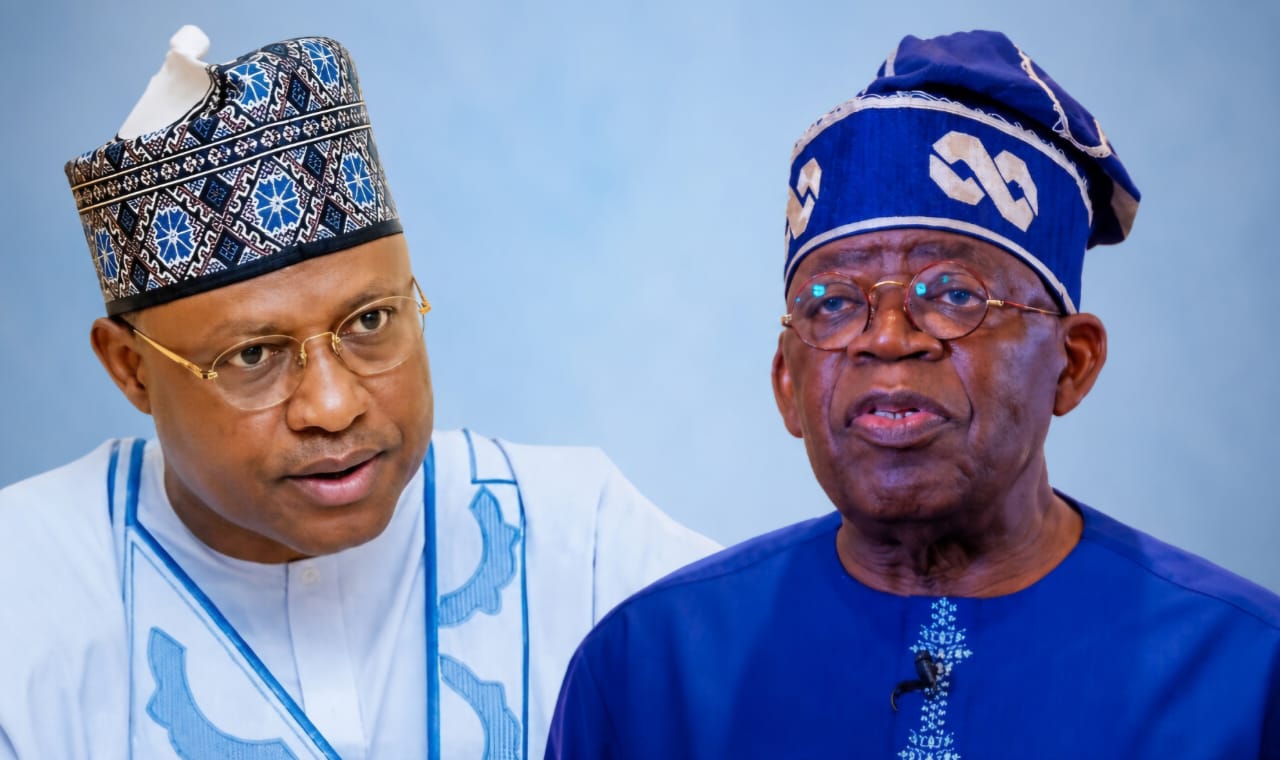
It reaffirmed its commendation of President Bola Ahmed Tinubu’s administration and the North-West governors for pursuing collaborative development initiatives, while recognising Governor Uba Sani’s emphasis on constructive engagement with the Federal Government and development partners in positioning Kaduna as an important destination for investment and regional economic growth.
The Forum also acknowledged the foundational role of Malam Sani Liman Kila, Founder and Convener of TUSCOF, in advancing the organisation’s vision and activities.