By Chuks Oyema-Aziken
Nigeria’s education sector receives just 1.5 per cent of global climate finance despite the country ranking second worldwide in children’s exposure to climate and environmental risks, raising concerns over the preparedness of schools to cope with the growing effects of climate change.
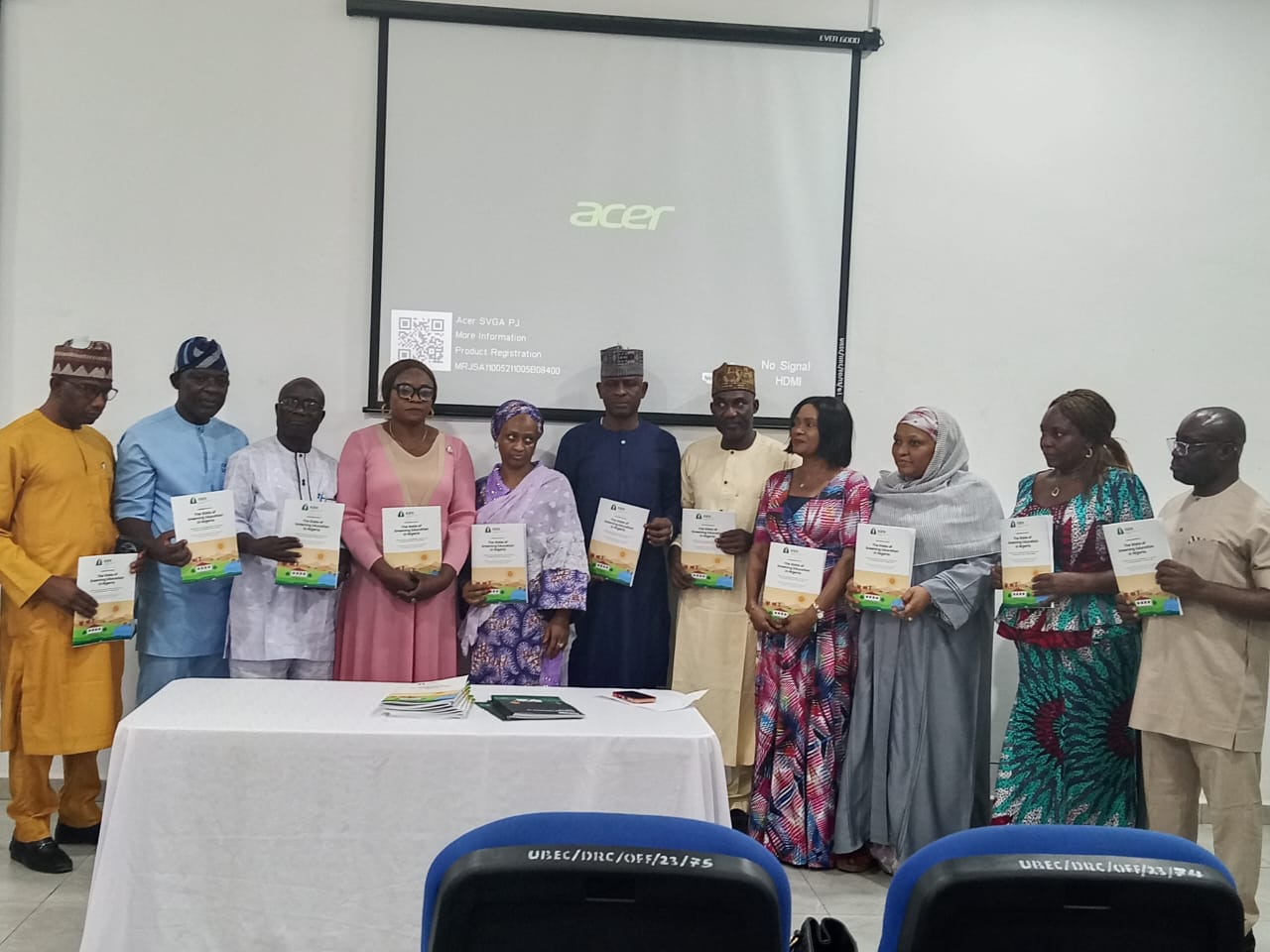
The finding is contained in the State of Greening Education in Nigeria Report and Policy Brief, launched in Abuja by the Institute for Greening Education in Nigeria (IGEN) in collaboration with the Universal Basic Education Commission (UBEC).
The report called on the Federal Government to adopt a National Policy on Greening Education, strengthen institutional coordination and increase investment in climate-resilient school infrastructure, teacher development and green skills acquisition.
Speaking at the launch, the Executive Secretary of IGEN, Mr Unyime Robinson, warned that flooding, extreme heat, erosion, drought and desertification were increasingly damaging school infrastructure, disrupting academic activities and threatening the wellbeing of Nigerian children.
He said Nigeria’s education system must move beyond teaching pupils about climate change to making environmental sustainability an integral part of school operations, teaching methods, infrastructure development and institutional management.
According to him, the report identified inadequate policy direction, weak institutional coordination, limited teacher capacity and insufficient climate financing as major obstacles to the effective implementation of greening education initiatives in the country.
Robinson advocated the integration of education into Nigeria’s Nationally Determined Contributions (NDCs) to enable the sector to benefit from domestic and international climate financing.
He lamented that climate finance was largely directed towards infrastructure projects, with limited attention given to green school programmes, teacher training and climate education.
“We are advocating that we should be able to put education at the centre of the Nationally Determined Contributions so we can also see how we can drive some climate finance into education,” he said.
The IGEN chief executive commended the Federal Government for establishing the Greening Schools and Climate Change Education Intervention (GSCCEI) under UBEC, noting that a two per cent matching-grant allocation had been set aside to support states in implementing green school programmes.
He described the intervention, which includes tree planting and other environmental activities, as an important foundation for expanding climate action across Nigerian schools.
Providing an update on the programme, the Executive Secretary of UBEC, Mrs Aisha Garba, represented by Dr Lydia Gbagi, reaffirmed the commission’s commitment to transforming Nigerian schools into environmentally responsible, climate-resilient and sustainable learning environments.
Garba said the initiative was designed to equip learners not only with academic knowledge but also with the values, competencies and practical skills required to address emerging environmental challenges.
She disclosed that 33 states, including the Federal Capital Territory (FCT), had benefited from state-level capacity development training conducted through the State Universal Basic Education Boards (SUBEBs).
According to her, the training focused on climate change education, integrating environmental sustainability into teaching and learning, establishing Climate Change and Green Champions Clubs, promoting practical greening activities and strengthening monitoring and reporting mechanisms.
She added that UBEC had developed implementation guidelines and training materials to facilitate the nationwide rollout of the programme.
These include the GSCCEI Implementation Guidelines, the Handbook for Climate Change and Green Champions Clubs, and guidelines for Green Schools and Climate Change Interventions.
Garba also disclosed that the National Greening Schools Programme (NGSP) had been developed as a broader framework for advancing environmental sustainability in Nigerian schools, with seven strategic pillars guiding its implementation.
She explained that the capacity development initiative had also produced state-level master trainers who would extend the training to local government areas and individual schools.
The UBEC chief executive said the intervention aligned with the government’s education reform agenda, the Nigeria Education Sector Renewal Initiative, the Climate Change Act 2021, Nigeria’s Nationally Determined Contributions and UNESCO’s Greening Education Partnership.
The IGEN report recommended the adoption of a National Policy on Greening Education, establishment of a national coordination mechanism and introduction of green and climate-ready school standards.
It also proposed the integration of climate change and environmental literacy into school curricula, continuous professional development for teachers and stronger green skills training through technical and vocational education.
Other recommendations include a national monitoring and evaluation framework, a digital portal for tracking implementation, stronger school-community partnerships and the establishment of a National Green Schools Index and Certification Scheme.
Robinson stressed that greening education should be treated not only as an environmental necessity but also as an economic strategy for preparing young Nigerians for emerging employment opportunities in renewable energy, sustainable agriculture, waste management and green construction.
He called for stronger collaboration among federal and state governments, education agencies, development partners, civil society organisations and the private sector to translate the report’s recommendations into practical interventions.
He also acknowledged the contributions of the African Centre for Environment, Agriculture and Rural Development, Green Schools International Foundation, researchers and other partners towards the development of the report and policy brief.
Both UBEC and IGEN expressed optimism that the publications would provide an evidence-based framework for strengthening environmental sustainability in Nigeria’s education system.
They urged stakeholders to ensure that schools become centres of environmental learning, innovation and practical climate action, with every Nigerian learner equipped with the knowledge, values and skills to contribute to a greener, more resilient and sustainable nation.