By Felix Khanoba
A Professor of Mathematics Education at the National Open University of Nigeria (NOUN), Samson Sunday Afolabi, has called for greater investment in Mathematics Education, urging the recruitment of more specialists and the introduction of postgraduate programmes to strengthen the discipline and support national development.
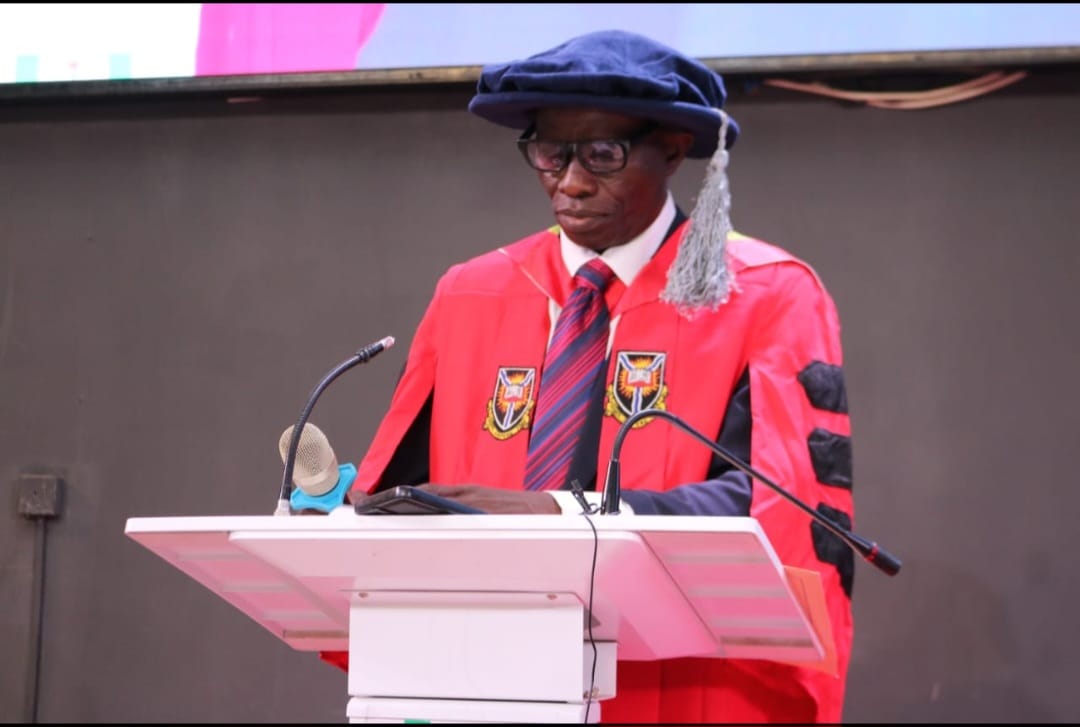
Afolabi made the appeal on Thursday while delivering the university’s 41st Inaugural Lecture at the NOUN Conference Centre in Abuja.
Speaking on the topic, “The What, Why, Who, How, When and Where: My Story in the Edifice of Mathematics Education,” the professor described Mathematics Education as a strategic discipline that develops the critical thinking, innovation and problem-solving skills needed to drive scientific advancement, technological growth and sustainable national development.
A statement signed by Omotola Ojudu -NOUN’s Acting Director, Media and Publicity , said Afolabi explained that while mathematicians focus on developing mathematical theories and concepts, mathematics educators concentrate on how the subject is taught and applied to address practical societal challenges.
According to him, Mathematics Education is learner-centred, interdisciplinary and requires continuous teacher development to improve learning outcomes and produce globally competitive graduates.
“My scholarly works justify Mathematics not merely as a school subject, but as a strategic instrument for personal empowerment, societal progress and national transformation,” he stated.
Drawing from his research, Afolabi said students’ study habits contribute more significantly to success in mathematics than gender, stressing the need to provide equal learning opportunities for all learners.
He described teachers as agents of transformation who must combine subject mastery with creativity, emotional intelligence and continuous professional development to inspire learners.
The professor proposed a six-pillar framework for improving Mathematics Education through transformational teaching methods, innovative instructional strategies, experiential learning, technology integration, equity and systemic innovation.
He also advocated the adoption of practical teaching approaches, improved assessment methods and wider use of digital technologies in mathematics instruction.
Afolabi further argued that Mathematics Education has a role to play in promoting peace and preventing conflicts by encouraging logical reasoning, collaboration and evidence-based decision-making.
Reviewing the growth of the discipline at NOUN, he disclosed that Mathematics Education ranked third in graduation output among the seven undergraduate programmes in the Department of Science Education between 2016 and 2024.
The development, he noted, underscores the need for the university to recruit more specialists to sustain the programme.
He also renewed his request for the establishment of Master of Education (M.Ed.) and Doctor of Philosophy (Ph.D.) programmes in Mathematics Education, noting that proposals had already been forwarded to the university management.
According to him, introducing the postgraduate programmes would improve student retention and reinforce NOUN’s position in teacher education.
“As many would say, Mathematics is the Queen of Sciences and King of Arts. How great a deal it will pay off if we elevate its status in our institution,” he remarked.
He also urged educators, policymakers and researchers to work together to advance Mathematics Education through sustained investment in quality teaching, technology, innovation and equitable access to learning.
Earlier, the Vice-Chancellor of NOUN, Prof. Uduma Oji Uduma, represented by the Deputy Vice-Chancellor, Technology, Innovation and Research, Prof. Christine Ofulue, described the inaugural lecture as an important intellectual contribution that reflected Afolabi’s academic journey while providing practical ideas for educational and national development.
He commended the professor for his contributions to teaching, research and mentorship, noting that Mathematics Education remains central to scientific and technological advancement.
The Vice-Chancellor also acknowledged Afolabi’s requests for additional specialists and postgraduate programmes, saying the recommendations would contribute to ongoing efforts to strengthen the university’s academic offerings.
The event featured the presentation of a copy of the inaugural lecture to the Vice-Chancellor’s representative and a commemorative plaque by the Faculty of Education in recognition of Afolabi’s contributions to Mathematics Education, scholarship and the growth of NOUN.
Principal officers of the university, senior staff, former vice-chancellors, guests, friends and family members attended the lecture.