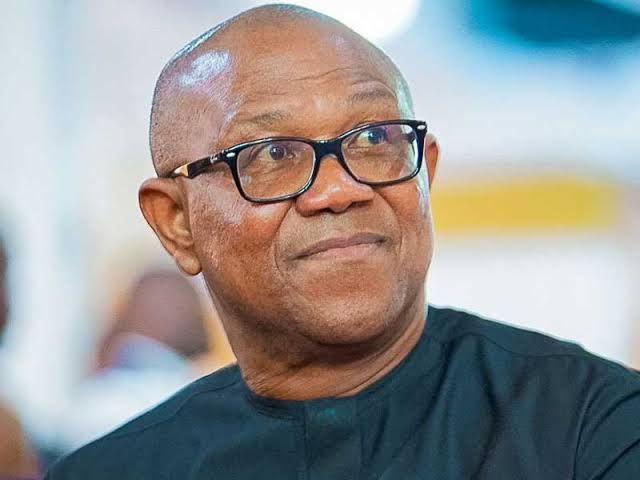
From Everest Ezihe, Owerri
The Southeast chapter of the Renewed Hope for Greater Nigeria (RHGN), led by Mazi Franklin Ngoforo, has opened a fresh political conversation ahead of the 2027 presidential election, resolving to engage prominent Igbo statesmen in an effort to persuade former Anambra State Governor and presidential candidate of the Nigerian Democratic Congress (NDC), Mr. Peter Obi, to withdraw from the race, join the All Progressives Congress (APC) and support President Bola Ahmed Tinubu’s re-election bid.
Ngoforo disclosed this on Saturday in Owerri while addressing journalists after a meeting of the Southeast leadership of the organisation.
He said the central focus of the meeting was how to secure victory for President Tinubu in all polling units across the five Southeast states.
According to him, RHGN would approach the leadership of Ohanaeze Ndigbo under Senator John Azuta Mbata, as well as elder statesmen, including Chief Emeka Anyaoku and Commodore Ebitu Ukiwe, and other influential Igbo leaders, urging them to lead a delegation to Obi.
Ngoforo explained that the proposed intervention was not intended to diminish Obi’s political stature or question his capacity, but to persuade him to place what RHGN considers the long-term strategic interests of Ndigbo above the immediate pursuit of a presidential ticket.
He said the proposed dialogue would encourage Obi to examine the 2027 contest beyond the prism of personal ambition and consider whether a broader political bargain could place the Southeast in a stronger position to secure the presidency in the nearest future.
The first consideration cited by RHGN was what Ngoforo described as the crisis within the NDC, particularly disputes arising from the processes through which candidates were selected across constituencies in the Southeast.
He argued that the controversy had generated deep discontent within the party and weakened the political structure upon which Obi would ordinarily depend for a presidential campaign.
In his assessment, a presidential ambition was only as strong as the political machinery behind it, adding that the fragmentation of what once appeared to be a strong support structure raised serious questions about the viability of another presidential bid under the present circumstances.
RHGN, he said, therefore believes that Obi should consider whether continuing the contest on what it regards as a weakened opposition platform represents the best use of his considerable political capital.
The second consideration, according to Ngoforo, was the political calculation in Northern Nigeria.
He said consultations undertaken by the RHGN Southeast leadership with northern political leaders had reinforced the organisation’s belief that Obi’s reported commitment to serving only one term could not, by itself, persuade the North to support his presidential ambition.
He argued that the politics of presidential succession could not be reduced to a promise of a four-year tenure, noting that political interests in the North, like those of every other geopolitical zone, would likely be driven by calculations involving power, succession and political security.
Ngoforo maintained that Igbo political strategy must recognise this reality instead of assuming that a one-term pledge would automatically unlock northern support for an Obi presidency.