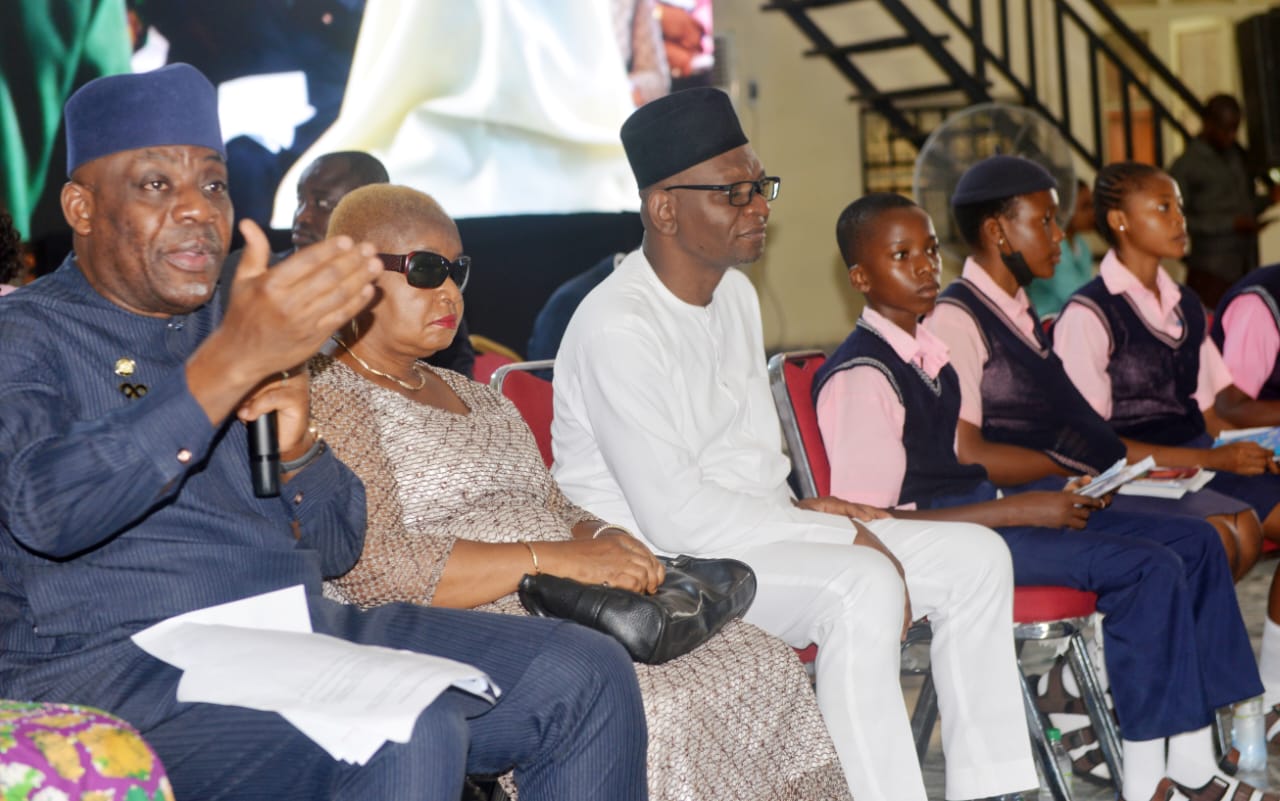
From left: Minister of Education, Dr. Maurf Tunji Alausa; Mrs Philomena Nneka Nweze, Executive Director/ CEO, National Primary Health Care Development Agency, Dr. Muyi Aina and some students during the kids dialogue series with the minister in Abuja on Wednesday
By Felix Khanoba
The Minister of Education, Dr Tunji Alausa, has challenged Nigerian students to embrace healthy living, maintain proper hygiene, eat nutritious meals and stay up to date with immunisation, describing these habits as critical to securing their future and preparing them for leadership roles.
Alausa gave the charge on Wednesday in Abuja at the maiden edition of the Kid’s Dialogue Series, an initiative of the Federal Ministry of Education in collaboration with the National Primary Health Care Development Agency (NPHCDA) and the Centre for Well-being and Integrated Nutritious Solutions (C-WINS).
The programme, hosted at Government Science Secondary School, Pyakasa, Abuja, was themed, “Empowering Young Voices to Shape Health, Learning and Well-being in Nigeria.”
Addressing students from different schools across the Federal Capital Territory during an interactive session, the minister stressed that good health remains the bedrock of academic success, productivity and effective leadership.
“If you don’t have health, you don’t have a life. You are the future of this nation and we have to start right by keeping you healthy. The most important person in keeping you healthy is you,” he said.
Alausa underscored the importance of vaccination, describing it as one of the most reliable tools for preventing life-threatening diseases. He encouraged students to ensure they were fully immunised by confirming their vaccination status with parents and teachers.
“You should ask your parents and teachers, am I up to date with my vaccination?” the minister said.
Speaking further, Alausa said medical advancements have made vaccines such as HPV effective in preventing certain forms of cancer, while vaccines against measles and polio continue to safeguard millions of children worldwide.
He noted that investing in children’s health was fundamental to national progress and the development of a productive future generation. He also applauded parents and teachers for their commitment to guiding and nurturing young people.
On his part, the Executive Director of the NPHCDA, Dr Muyi Aina, urged students to serve as advocates of healthy living within their schools and communities.
“As you learn, it is important that you also practise healthy behaviours, get your vaccinations, maintain good hygiene and eat nutritious food,” he said.
Aina said the dialogue reflected the need to involve young people in conversations about health and well-being from an early age.
“We need to catch them young and set them on the path of health. For you to become healthy, productive adults, you need both education and good health,” he said.
He encouraged participants and educators to actively contribute ideas and ask questions, noting that such engagements could influence policies and programmes aimed at improving children’s health outcomes.
The session featured discussions on immunisation, mental health and general well-being, with students taking the opportunity to seek clarification on issues affecting young people.
David Johnson, a student of Junior Secondary School, Tudun Wada, asked whether individuals dealing with trauma and depression could fully recover, while Adewumi Temiloluwa sought advice on what children could do when parents refuse to allow them receive vaccines.
Responding, Alausa explained that recovery from trauma and depression was achievable through professional support and open conversations with trusted individuals. He advised affected persons to speak out and seek help from psychologists when necessary.
On vaccination, he said parents should support immunisation efforts, adding that children could help educate their parents on its benefits and seek assistance from teachers where necessary, stressing that vaccines remain a proven safeguard against deadly diseases.
The minister further reaffirmed the commitment of the administration of President Bola Tinubu to protecting the well-being of Nigerian children through advocacy campaigns and targeted intervention programmes.
“This kind of advocacy that we did today, myself as Minister of Education, coming to sit with these kids, shows the importance President Bola Tinubu places on the health and the future of these children,” he said.