By Chuks Oyema-Aziken
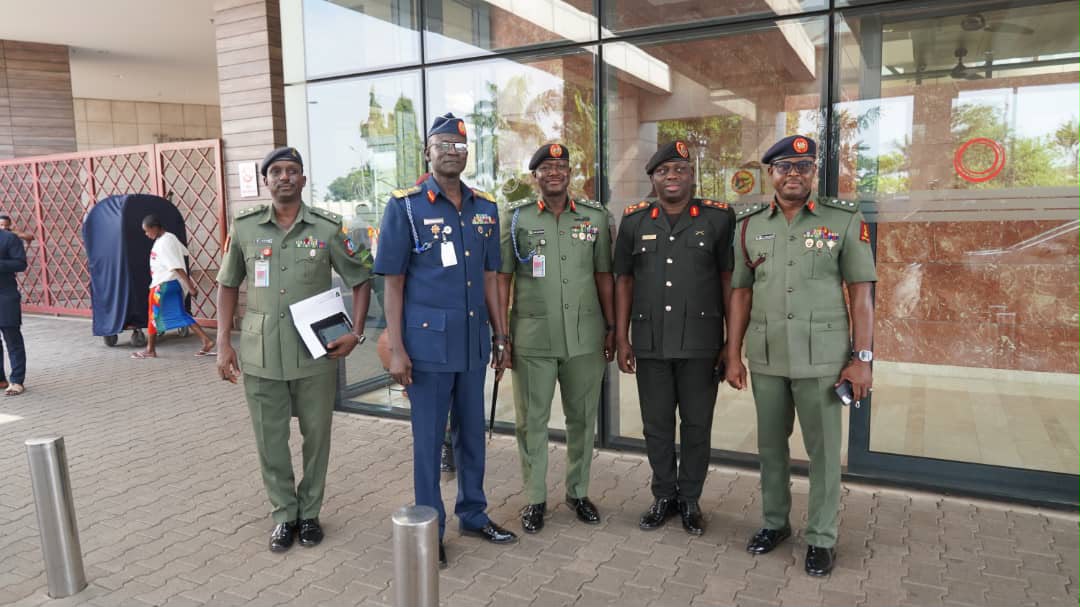
The Defence Headquarters (DHQ) on Monday hosted the Induction and Orientation Programme for members of the Military Staff Committee (MSC) of the African Union (AU) Peace and Security Council (PSC) in Abuja, reaffirming Nigeria’s commitment to promoting peace, security and stability across Africa.
The event brought together delegates from member states of the AU Peace and Security Council for a two-day capacity-building programme aimed at enhancing the effectiveness of the Committee and strengthening military cooperation across the continent.
Director Defence Information, Major General Samaila Uba, said the programme reflects Nigeria’s unwavering dedication to supporting continental peace initiatives and strengthening Africa’s collective security architecture through sustained collaboration and strategic engagement.
Speaking at the opening ceremony, the Chief of Defence Staff (CDS), General Olufemi Oluyede, represented by the Director of Search and Rescue, Defence Headquarters, Air Vice Marshal Idi Sani, welcomed the delegates and expressed appreciation to the African Union Commission for selecting Nigeria to host the strategic retreat.
Oluyede noted that Africa continues to grapple with complex and evolving security challenges, including terrorism, violent extremism, transnational organised crime, maritime insecurity, cyber threats and humanitarian crises, stressing that such threats require coordinated responses and enhanced military cooperation among member states.
He explained that the Military Staff Committee, as the principal military advisory body to the Peace and Security Council, plays a critical role in providing professional military advice and strategic assessments to support informed decision-making on conflict prevention, crisis response and peace support operations.
Also speaking, the Head of the PSC Secretariat of the African Union Commission, Ms Neama Chusi, described the MSC as the only subsidiary organ specifically established under the Protocol Relating to the Establishment of the Peace and Security Council.
According to her, the Committee remains indispensable in providing military perspectives that complement diplomatic efforts in conflict prevention, management and resolution across the continent.
Chusi urged participants to engage actively, share experiences and contribute meaningfully to discussions aimed at strengthening the effectiveness of the Committee in addressing Africa’s security challenges.
In his remarks, Chairperson of the Military Staff Committee, Brigadier General Abubakar Conteh, highlighted the growing relevance of the Committee in the face of Africa’s increasingly dynamic security environment.
He observed that emerging challenges such as terrorism, unconstitutional changes of government, organised crime, climate-related security risks and cyber threats require sound military advice and stronger collaboration among member states.
Conteh described the induction programme as a vital platform for strengthening institutional knowledge, fostering cooperation and enhancing the Committee’s capacity to provide timely and objective military advice to the Peace and Security Council.
The two-day programme features presentations, discussions, practical exercises and experience-sharing sessions designed to familiarise newly appointed and returning members with the Committee’s mandate, working methods and operational procedures while promoting stronger collaboration among member states.
Participants are expected to explore ways of improving coordination and enhancing the effectiveness of Africa’s peace and security mechanisms as the continent continues to confront evolving threats to stability and development.