- Begs contacts to be truthful about their movements
- Approves N100,000 weekly allowance for quarantined contacts
By Our Reporter
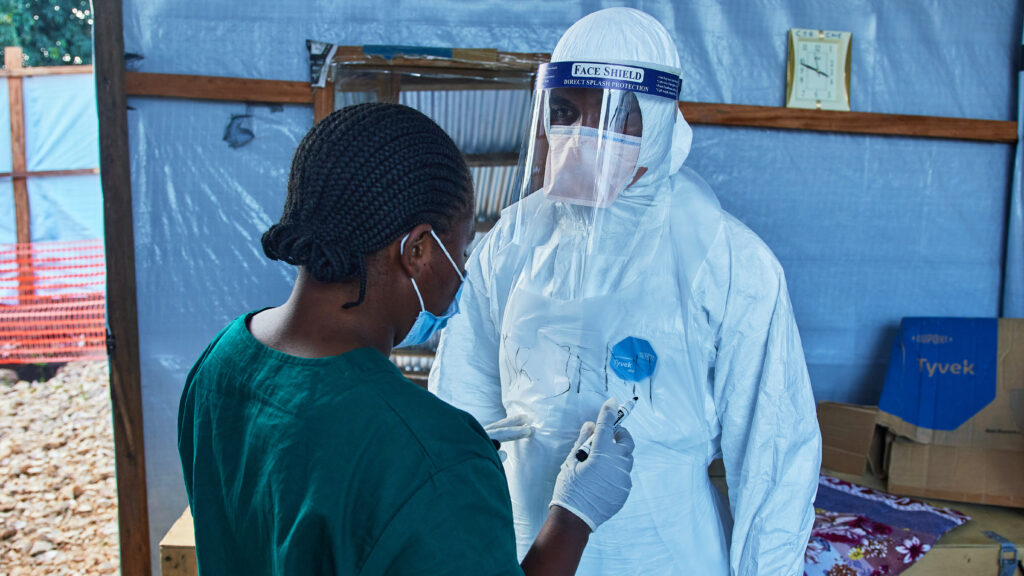
The Nigeria Centre for Disease Control and Prevention (NCDC) has expanded its contact-tracing exercise to 53 people following the confirmation of an Ebola case in the Federal Capital Territory (FCT).
The Director-General of the NCDC, Dr Jide Idris, disclosed this on Sunday during a media briefing in Abuja on the country’s response to the outbreak.
Idris said 44 of the identified contacts were linked to the health facility where the infected patient received treatment, while nine others were identified through further investigations.
The additional contacts include three household members of the patient, her driver, chef and husband, three people who attended to her at Julius Berger Clinic before she was transferred to another facility, and three health personnel involved in collecting samples from her.
The NCDC chief said the contacts had been listed and categorised according to their level of exposure, while public health teams continued to monitor their health status.
He explained that investigators were also tracing secondary contacts, including people who might have been exposed through those already identified, to establish the extent of possible transmission.
According to him, none of the 53 contacts had developed symptoms or tested positive for Ebola as of the time of the briefing.
The agency is monitoring identified contacts for 21 days from their last possible exposure to the virus, with surveillance teams expected to promptly assess anyone who develops symptoms.
Nigeria confirmed its first case of Ebola Bundibugyo virus disease on October 20, after a 42-year-old woman who travelled from Uganda through Addis Ababa to Abuja was diagnosed with the infection.
According to the NCDC’s situation report, the patient developed symptoms on October 7 and sought treatment at two private health facilities on October 10 and 11 before the agency was notified on October 19.
The patient was subsequently isolated and placed under medical care. The NCDC’s October 24 situation report said her condition had improved remarkably.
In a related development, the agency said a suspected Ebola case reported by Rivers State on October 23 tested negative following laboratory investigations.
The NCDC has urged public and private healthcare facilities to strengthen infection prevention and control measures, promptly isolate suspected cases and report them to the appropriate public health authorities.
It also appealed to Nigerians contacted by surveillance teams to cooperate with health officials and provide accurate information about their movements, contacts and any symptoms they may have experienced.
The agency stressed that being identified as a contact does not mean that a person has contracted Ebola, but requires monitoring to ensure that any possible infection is detected early and further transmission prevented.
The NCDC also announced that it had approved an emergency payment of N100,000 per person weekly for individuals placed under isolation or quarantine as authorities intensify efforts to contain the Ebola outbreak in the Federal Capital Territory (FCT).
Dr Idris explained that the intervention followed complaints from some people identified as contacts of the confirmed Ebola patient over the financial burden of complying with public health monitoring measures.
He said some of the contacts were concerned about how to feed themselves, pay for accommodation and cater for their families while complying with restrictions that prevented them from carrying on with their normal activities.
“We are paying for their accommodation; we are paying for their feeding. Some of them are asking for a stipend to maintain their families,” he said.
He added that the agency approved N100,000 per person weekly to provide additional support during the monitoring period.
“We are providing N100,000 per person per week just to maintain their comfort and feeding, because they were complaining,” Idris said.
The NCDC chief described the payment as an emergency intervention that was not included in the agency’s initial response plan but became necessary because of the circumstances surrounding the outbreak.
“This was not planned for, but it is an emergency. We will continue to review it as we go along,” he said.
According to him, the arrangement would be reviewed as the response progresses, depending on the needs of those affected and developments in the outbreak.
Idris also stressed that the responsibility for supporting people affected by public health emergencies should not rest solely on the FCT authorities, urging state governments to prepare financially and logistically for similar situations.
“This is not the responsibility of the FCT alone. What we have to do for the FCT, we have to do for any other state, just in case,” he said.
He called on state governments to make adequate budgetary provisions and provide the personnel, facilities, equipment and other materials required for contact tracing, isolation and emergency response activities.
The NCDC director-general said adequate preparation at the state level was essential to ensuring a coordinated response and preventing resource shortages during public health emergencies.