
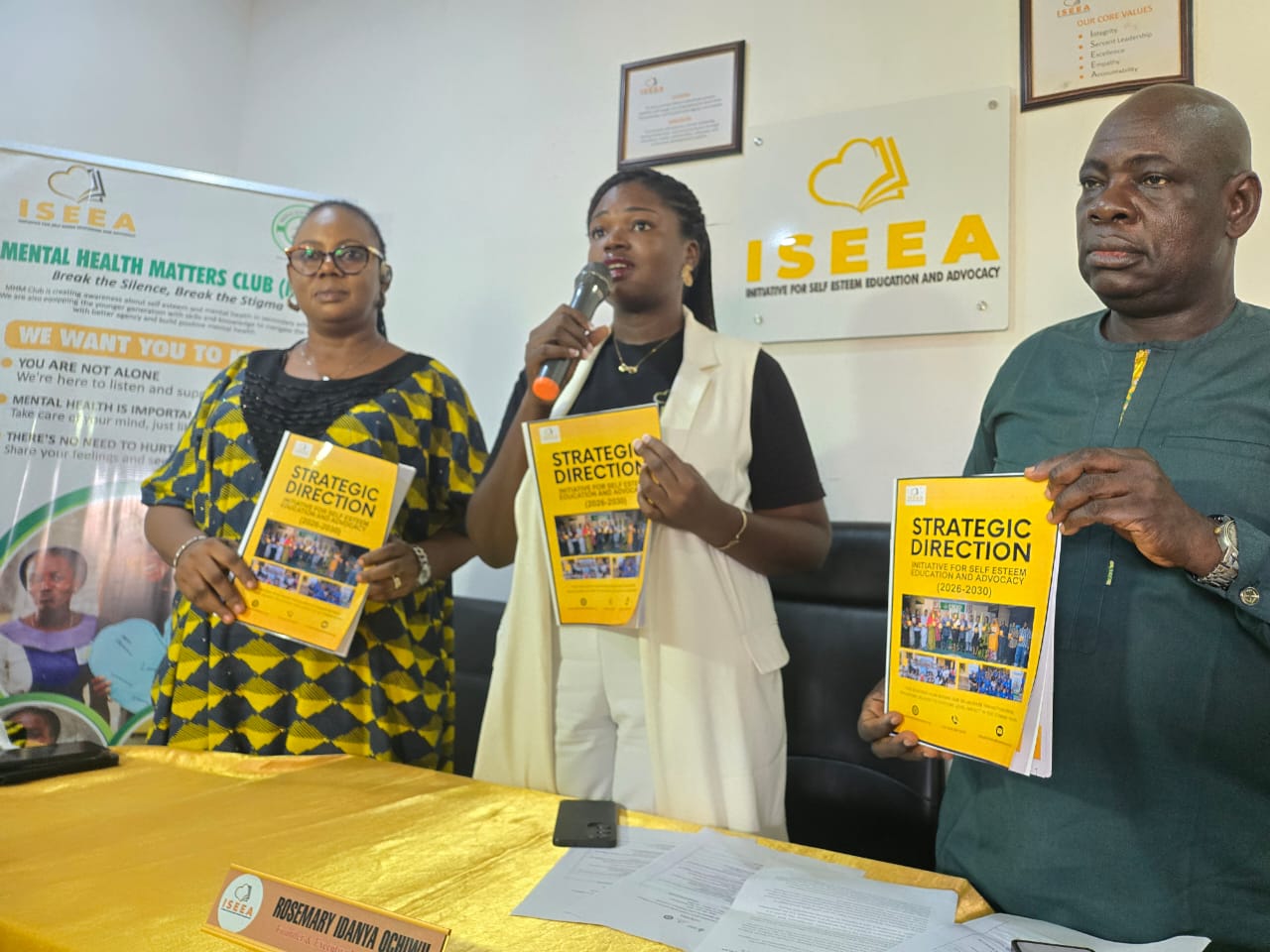
A civil society group, ISEEA, has urged educational institutions across the country to prioritise mental health support for adolescents and young people, stressing that schools should serve as safe environments where students can access emotional and psychological assistance.
The call was made in Abuja by the Founder and Executive Director of ISEEA, Rosemary Idanya Ochiwu, during the unveiling of the organisation’s 2026–2030 Strategic Direction Plan and the launch of its first Mental Health and Self-Esteem E-Journal.
Ochiwu expressed concern over the growing incidence of anxiety, depression, substance abuse and poor self-esteem among young people, noting that the challenges require a coordinated response that goes beyond isolated interventions.
She said many adolescents continue to grapple with emotional difficulties, bullying, abuse, peer pressure, substance use and other mental health concerns, while many schools are yet to establish structured support mechanisms, trained personnel and effective referral systems to assist affected students.
According to her, the organisation’s four-year strategic plan is anchored on the implementation of the THRIVE Model, a framework designed to provide sustainable mental wellness support to more than 60,000 adolescents and young people nationwide.
She explained that the model incorporates school-based mental health clubs, capacity-building programmes for teachers and school administrators, referral and response systems, family and community engagement initiatives, as well as virtual learning and digital support platforms.
“Schools must become safe spaces and entry points where young people can access mental health education, peer support and personal development opportunities,” she said.
Ochiwu further disclosed that ISEEA would strengthen its policy advocacy efforts to ensure mental wellness support for adolescents and youths is institutionalised within educational and youth development structures across the country.
She maintained that sustainable progress in the sector would depend on effective policies, strategic partnerships, strong institutions and evidence-based programmes capable of delivering lasting results.
As part of efforts to deepen awareness and encourage informed action, she announced the release of the organisation’s maiden Mental Health and Self-Esteem E-Journal, which contains expert analyses, policy recommendations, data-driven insights and personal experiences shared by young people who have confronted mental health and self-esteem challenges.
“The journal is more than a publication. It is a platform for amplifying voices, reducing stigma, encouraging dialogue and promoting evidence-informed action,” she said.
Also speaking at the event, the National Coordinator of the National Mental Health Programme, Dr Ojo Tunde Massey-Ferguson, represented by the Assistant Director of Nursing and Head of the Coordinating Unit, Grace Ogunleye Adedunmade, praised ISEEA for developing a strategic framework aimed at tackling mental health challenges among young Nigerians.
He described Nigeria’s youthful population as a valuable national asset and emphasised the need for sustained investment in mental health and wellbeing to support the country’s development goals.
He stated that the Federal Ministry of Health and Social Welfare has continued to place greater emphasis on prevention, early detection and timely intervention in addressing mental health issues.
According to him, schools remain critical platforms for reaching young people at an early stage, helping to build resilience and foster supportive learning environments.
The National Mental Health Programme also expressed its readiness to work with ISEEA and other stakeholders to identify opportunities for expanding evidence-based mental health interventions in schools across Nigeria.
Similarly, representing the Director of Youth Health Mental and Psychosocial Affairs (YHMPA), Mr Essien Emmanuel Mfon reaffirmed the ministry’s commitment to supporting the organisation, describing its strategic direction as an important initiative for empowering young Nigerians.
He noted that qualities such as self-esteem, resilience and confidence are essential for young people to make meaningful contributions to society and promote sustainable national development.
The ministry added that collaboration among government agencies, civil society organisations and development partners remains vital to advancing youth development and improving the overall wellbeing of Nigerian youths.
